

What are environmental safety checks?

In the context of facilities, environmental safety checks are visual inspections that look for common hazards that could impact a building’s occupants.

A photo of an employee performing an environmental safety inspection in an educational facility holding a tablet.

Your frontline team members have amazing insight into building safety. They’re the ones on the ground each day, interacting with residents and visitors in the space. Establishing a standard environmental safety audit gives your team the tools to easily report and follow up on any safety issues.

What is an environmental safety check, and why is it important?

Environmental safety checks address potential hazards faced by the people who live in or use facilities. They’re different from the processes your team might already have in place for workplace safety, chemical handling, equipment safety, building security, and incident response.

Environmental safety checklists for completing tasks such as clearing sidewalks of snow and ice, salting, and checking extinguishers help ensure completion of the work and create a record of service in case of an incident.

What are the benefits of environmental safety inspections?

Your team is likely already spotting hazards. Environmental safety inspections create a clear process for them to follow when that happens, as well as a regular reminder to stop and assess the environment.

You might incorporate a visual check for common hazards into end-of-shift checks or perform regular, dedicated safety walkthroughs. These inspections have several benefits:

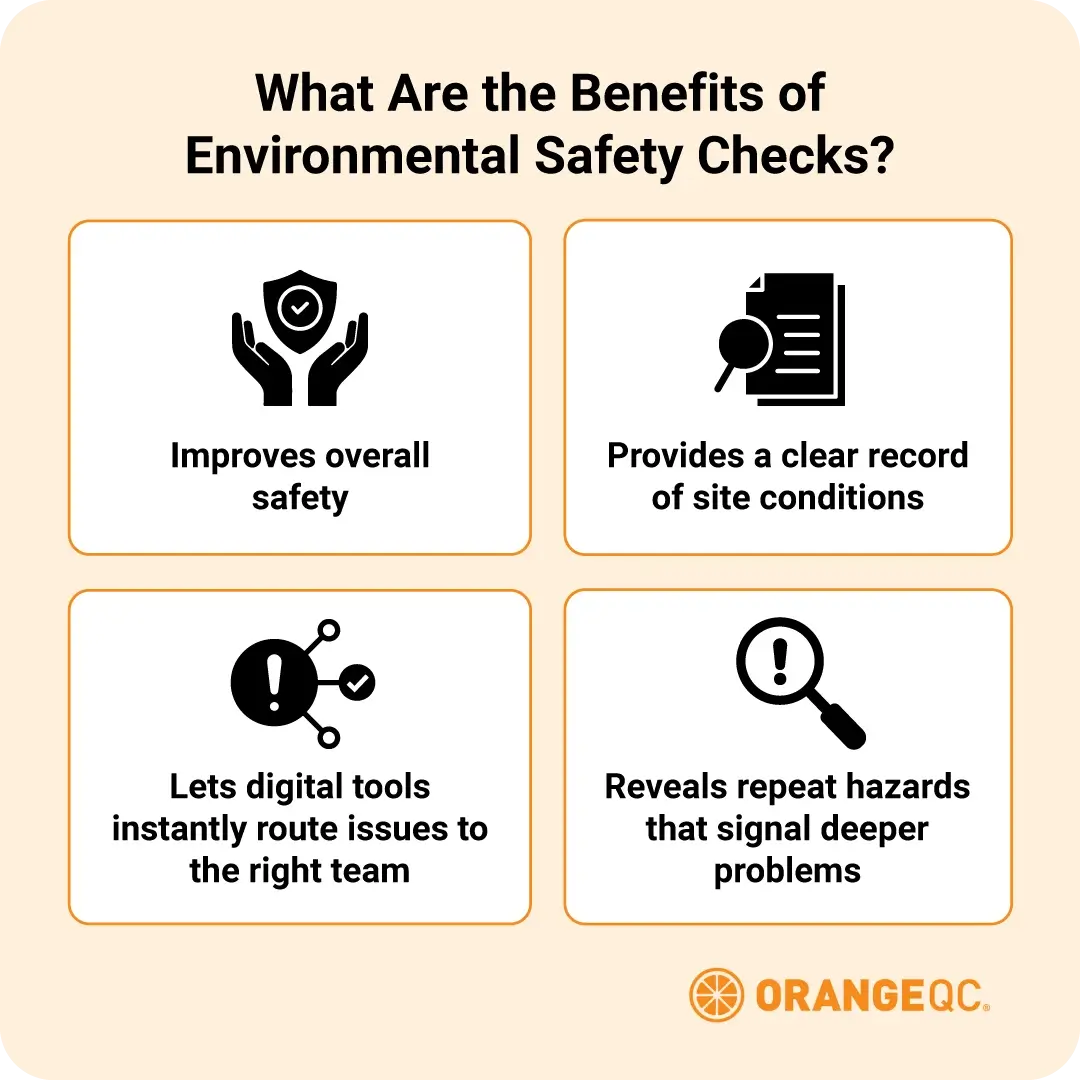
  • They help keep everyone safe.

  • They create a paper trail documenting conditions, including times when hazards weren’t present after service.

  • If team members use digital tools for the visual check, they allow for immediate escalation of issues to the right person or team.

  • They create data to help identify persistent hazards that may require a solution to an underlying problem, such as insufficient matting creating slip hazards on tiled surfaces, building residents propping open fire doors that need signage, or roofing issues leading to overhanging icicles in winter.

Steps for building an environmental safety inspection program

The environmental safety audits your team conducts will depend on their responsibilities. Some organizations assign a safety point of contact who can offer useful suggestions for areas needing more attention. You can also do a walkthrough of your buildings with your team, making a list of hazards as you go.

For example, if you’re working in a residence hall on a university campus, you might ask resident assistants to incorporate safety checks in their rounds.

When building an environmental safety inspection program:

  1. Start with scope: Check your contract or service level agreement (SLA) to see what your team is responsible for.

  2. Consult with internal experts: Talk to any safety, compliance, or fire points of contact to get their input.

  3. Define escalation paths: Clarify the next steps in case of a problem, such as who to notify, how quickly, and what information to share.

  4. Use checklists for repeatable tasks: Formalize an environmental safety checklist process for jobs such as sidewalk clearing or salting, visual extinguisher checks, AED checks, and anything else your team manages to ensure completion and create a record of service.

  5. Document work consistently: This ensures a timestamped history of conditions and actions in the event of an incident.

Examples of common environmental safety hazards for facility visitors

After you’ve talked with the building’s stakeholders and your own team members about the hazards they’re most likely to encounter, consider these common risks as well.

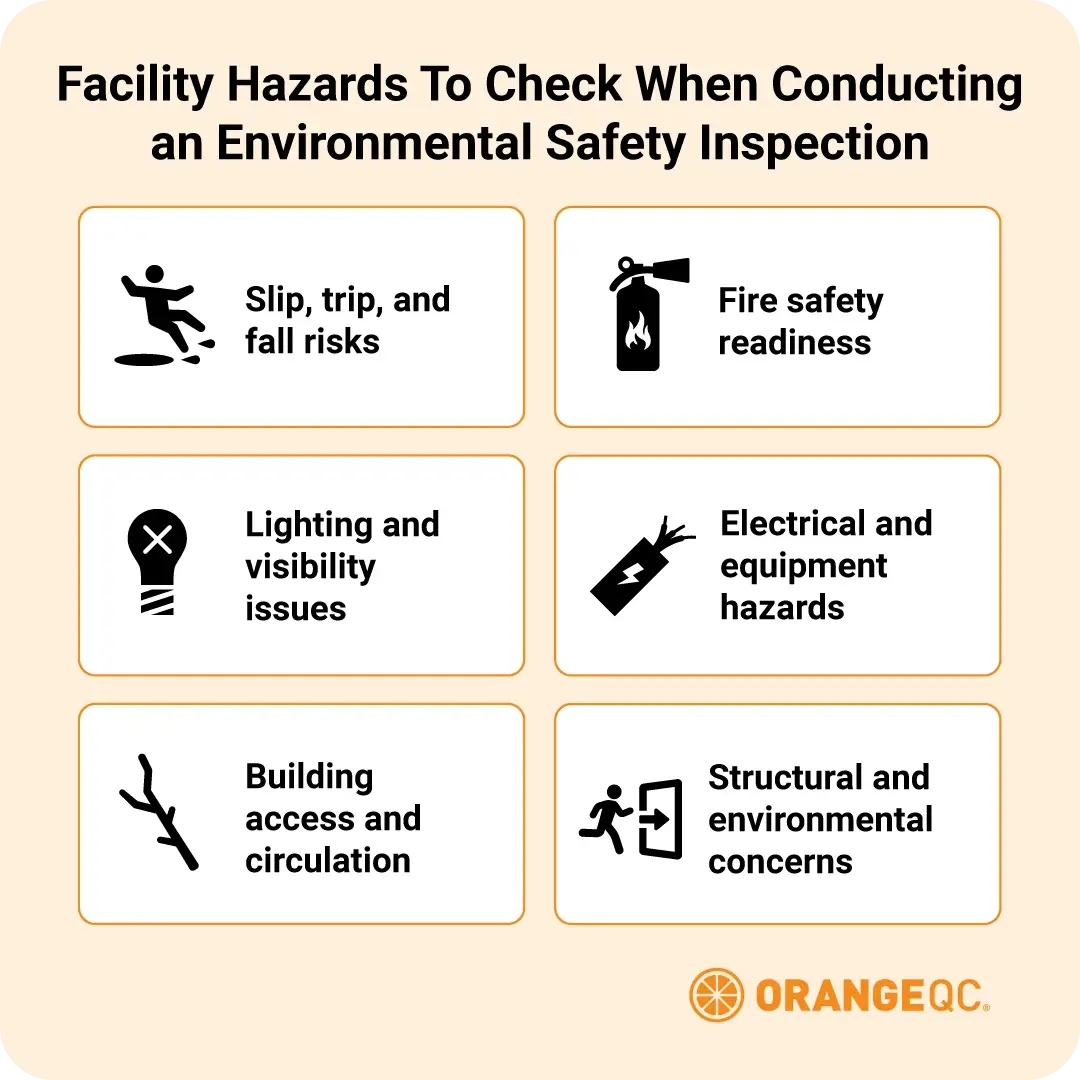
Safety hazards to look for outside the facility:

  • Ice patches and other trip or slip hazards

  • Overhanging icicles

  • Insufficient lighting or burned-out bulbs

  • Loose branches or debris

Safety hazards to look for inside the facility:

  • Signs of mold

  • Faulty fire safety equipment, including fire extinguishers, fire doors, and sprinkler systems

  • Broken exit sign lights

  • Malfunctioning alarm systems

  • Faulty AEDs and other health equipment

  • Trip or slip hazards

  • Worn wiring or other electrical hazards

  • Broken or loose guardrails

  • Damaged or missing safety signage

An illustration depicting tips for what to inspect inside and outside a facility when performing an environmental safety check, referenced above.

How a team uses OrangeQC for environmental safety checks

While a general safety walkthrough is a good start, becoming more specific with your checks will help your team catch more potential problems before they turn into hazards. Improve your process by:

  • Scheduling recurring monthly and seasonal checks ahead of time so you don’t miss anything.

  • Making it easy for anyone to escalate a safety issue to the right team.

  • Including information such as timestamps and photos to validate that team members have completed the right checks.

  • Following up regularly on safety check reports to identify any trends that indicate a need for new equipment, more regular maintenance, better signage, etc.

Using a digital inspection and checklist app streamlines the process. See how our tools can help your team stay on top of safety and other quality issues.

FAQs

Who should perform environmental safety checks?

Custodians, maintenance workers, supervisors, and building liaisons are all great candidates for performing regular safety checks. Additionally, everyone in the building should know how to report safety concerns to the right person.

How can you make an environmental safety audit compliant with federal, state, or local regulations?

You’ll want to consult with your legal representative to ensure you’re complying with any relevant laws and regulations. APPA recommends this four-part process:

  1. Determine federal, state, and local regulations that apply within the United States.

  2. Determine additional safety requirements based on the contract or SLA.

  3. Go with the strictest option in the event of overlapping requirements.

  4. Use best practices, such as voluntary consensus standards provided by the National Fire Protection Association; the American National Standards Institute; the American Society of Heating, Refrigerating and Air-Conditioning Engineers; the Americans with Disabilities Act; and other standard-setting organizations.

How often should you perform an environmental check?

You should perform environmental checks often, but not all checks need to be identical. For example, you might incorporate basic safety checks into a routine nightly closing checklist or as part of a standard weekly inspection. More in-depth checks can be more spread out. You’ll know you have the right cadence if you’re catching safety problems early and fixing them fast. Local, state, or federal regulations may also apply.

What if an inspector or custodian finds a serious safety hazard?

The answer to this is going to be highly dependent on your context—and it’s an answer that everyone on your team should know. What steps should they take in the event of a hazard? How should they document and report it? What should they do if an immediate fix isn’t possible? Create a plan, and communicate it regularly.

More inspection resources

Office inspection checklist and guide.

Office Inspection Form and Cleaning Checklist

Office inspection form & cleaning checklist Great quality control starts with clear expectations for your cleaning team, then follows through by measuring the results. Whether you modify our office forms or create your own, match

Restroom inspection checklist and guide.

Restroom Inspection Form and Cleaning Checklist

Restroom inspection form & cleaning checklist A good quality control plan involves the entire team. Lay out clear expectations for your custodial staff with a restroom cleaning checklist that helps them pass restroom inspections with
Hallway inspection checklist and guide.

Hallway Inspection Form and Cleaning Checklist

Hallway inspection form & cleaning checklist We’ve put together a sample inspection form and cleaning checklist for hallways and corridors. You’ll also find tips for customizing the form to fit your team’s process, or creating

Facility team member using the OrangeQC cleaning standards app on a smartphone.

Understanding Cleaning Standards

Understanding cleaning standards Cleaning standards create a common language for custodial teams and their clients to talk about expectations and performance. Last Updated Jump to a section: Sign up for a free trial Get a