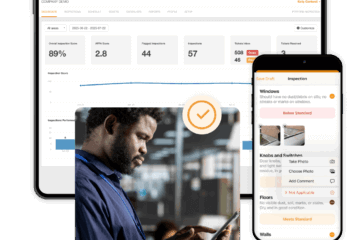
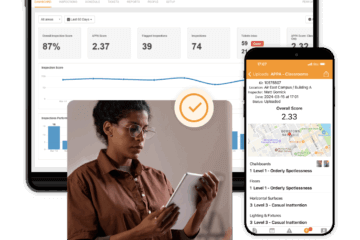
Classroom cleaning checklist & readiness inspection form

Detailed checklists and inspection forms help custodial teams ensure that classrooms are always ready for learning.

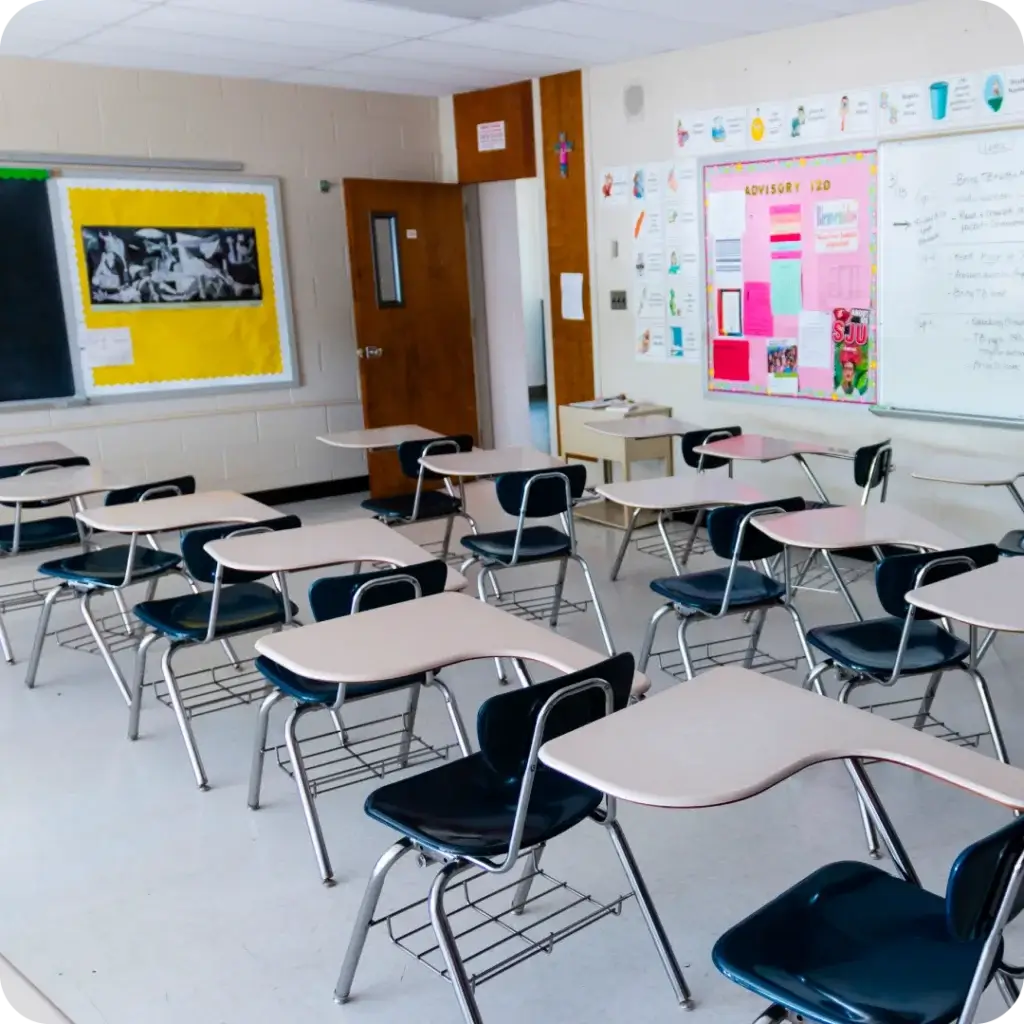
A photo of a well-maintained classroom, illustrating classroom quality control.

It doesn’t take much to interrupt class. A flickering light can distract students who are already struggling to pay attention. An audio-visual system that refuses to show the right slides might derail an entire lesson plan. And a dirty, unorganized classroom is proven to have a negative effect on learning outcomes.

Educational facilities teams at K-12 schools and universities rely on checklists and frequent inspections to make sure every classroom is ready for learning.

What are classroom readiness inspections?

A classroom readiness inspection is a check to ensure a classroom is clean, organized, and in good working order so students can learn without distractions. Classroom readiness inspections consider the classroom environment as a whole. They take a student-focused approach, emphasizing anything that would interrupt lesson flow or distract students, regardless of who is responsible for correcting the problem.

Classroom and lecture hall inspections that measure readiness

Readiness inspections consider all the teams that support classrooms. These include:

  • Cleaning: Classroom cleaning inspections focus on the space’s overall appearance and cleanliness. This includes flooring, horizontal and vertical surfaces, and trash removal.

  • Maintenance: Maintenance inspections aim to catch problems with the room’s furniture, fixtures, or systems. This includes heating, ventilation, and air conditioning systems that keep the room at a comfortable temperature.

  • Technology: Classroom technology checklists cover whatever technology instructors and students need to use in the classroom. This includes internet access, equipment such as projectors, and interactive displays like SMART Boards. Lecture halls often have an audio-visual suite with a sound system, multiple displays, and presentation technology.

  • Room setups: To measure room setup quality, compare how closely the room matches the instructor’s requested setup. Does the setup change day to day? Are all layouts and scheduling notes available to the custodian responsible for setups?

  • Activity support: If students use classrooms or lecture halls for clubs or other activities, there should be a clearly communicated schedule for any setups or additional cleaning needed. Check whether the room is ready for activities and reset it to the usual configuration before it’s needed.

Sample classroom readiness inspection form​

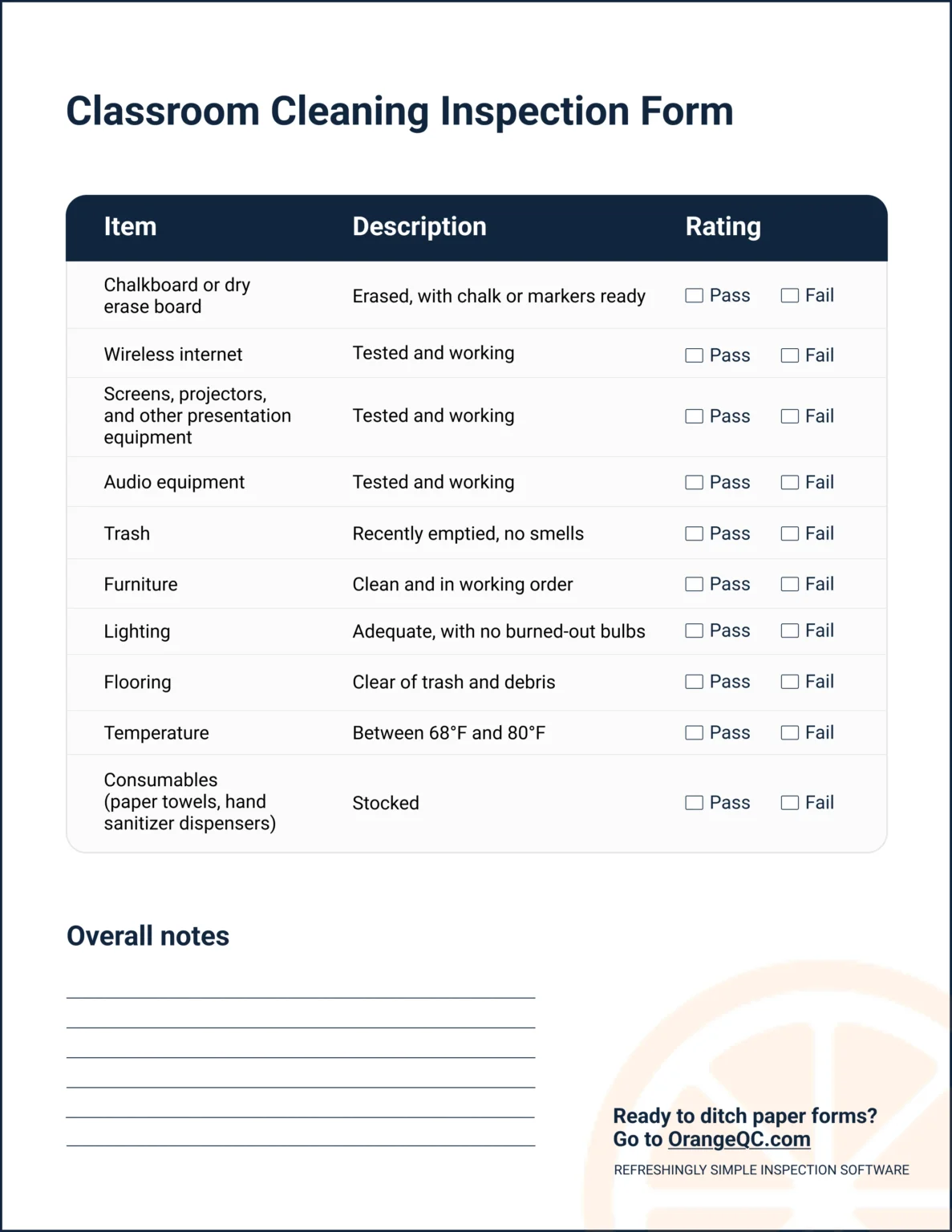
This classroom readiness inspection form helps inspectors quickly identify whether a room is ready for classes or lectures. Rather than focusing only on what specific teams are responsible for, as a cleaning inspection would, it considers the whole environment from the perspective of students and instructors. A simple pass/fail rating keeps the inspection quick and highlights corrective actions.

Item Description Pass / Fail
Chalkboard or dry erase board Erased, with chalk or markers ready Pass / Fail
Wireless internet Tested and working Pass / Fail
Screens, projectors, and other presentation equipment Tested and working Pass / Fail
Audio equipment Tested and working Pass / Fail
Trash Recently emptied, no smells Pass / Fail
Furniture Clean and in working order Pass / Fail
Lighting Adequate, with no burned-out bulbs Pass / Fail
Flooring Clear of trash and debris Pass / Fail
Temperature Between 68°F and 80°F Pass / Fail
Consumables (paper towels, hand sanitizer dispensers) Stocked Pass / Fail
Overall Notes:

Sample daily and weekly classroom cleaning checklists​

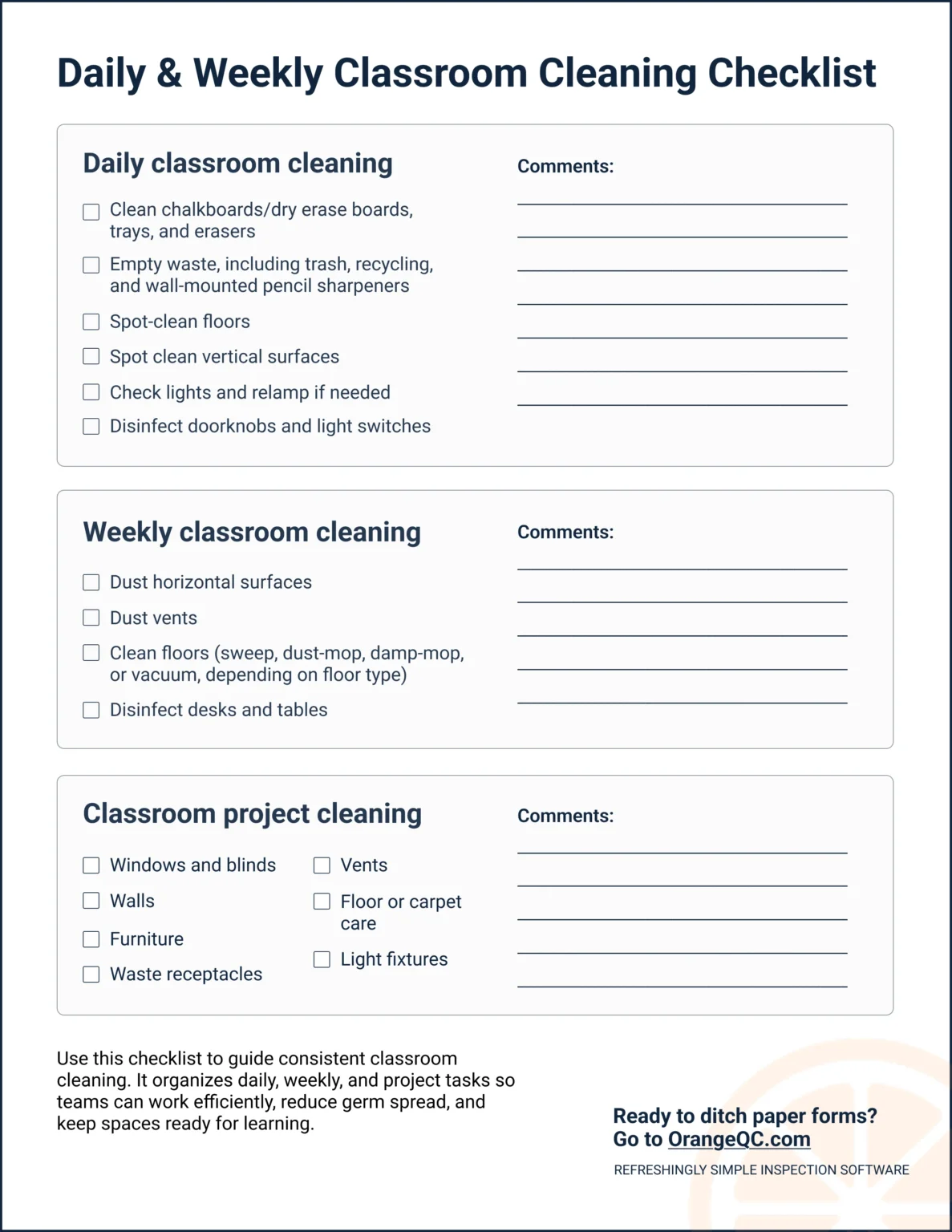
These example classroom or auditorium cleaning checklists are a starting point for your team to create a task list customized to your responsibilities.

Daily classroom cleaning checklist

A daily classroom or lecture hall cleaning checklist ensures a fresh learning environment each day and helps prevent the spread of germs and viruses.

Weekly classroom cleaning checklist

Each classroom should get a more thorough cleaning on a weekly basis to prevent dust build-up.

Classroom project cleaning checklist

Classroom project cleaning is highly dependent on each room’s surface types and fixtures. Your team can tackle these lecture hall cleaning checklist items monthly, seasonally, or yearly as your facility’s needs and resources dictate.

Routine classroom cleaning vs. project cleaning

Develop a cadence of daily, weekly, monthly, and quarterly cleaning tasks. Scheduling these intervals in a calendar keeps your team on top of both immediate and long-term needs. Don’t be hesitant to adjust frequency based on what you notice in regular inspections.

Meanwhile, keep a record of project cleaning that your team needs to complete. Make it available digitally or post it in a central location so your team can see upcoming tasks and overall progress.

What quality standards apply to classroom cleaning?

Standards vary widely across educational settings. In the United States, the CDC offers guidelines for cleaning and disinfecting early educational environments, such as preschool classrooms, which are also subject to local regulations and licensing.

Past this age, various organizations offer guidance and standards that can help educational facilities teams plan for effective classroom or lecture hall cleaning.

APPA custodial service levels were developed for use in higher education. Both K-12 public districts and private schools have embraced these standards. They’re extremely helpful for determining levels of care with limited resources.

ISSA created the Clean Standard: K-12 for elementary through high school settings. It combines subjective visual audits with recommended ranges for ATP testing results.

Other sources of quality data for classrooms, auditoriums, and lecture halls

Classroom and auditorium inspections are an important part of custodial quality control, but there are other ways to get feedback:

  • Complaints and requests for corrective actions can signal mismatched expectations, insufficient cleaning, and other problems. Investigate to pinpoint the issue, then track that data.

  • Student and instructor surveys can reveal what each group values most in a learning environment, as well as their perception of your performance.

  • Surface testing, such as from ATP meters, provides quantitative data on cleaning and disinfection.

  • QR codes or dedicated email addresses for feedback can yield reports of rooms that need attention.

How the University of Minnesota skyrocketed its classroom readiness

The University of Minnesota formed its Office of Classroom Management in 1999 to address a formidable goal: to completely turn around the state of classrooms on campus.

At the time, only 41% of classrooms met the team’s readiness standards. Today, that figure sits at about 95%.

To get there, the team has mastered covering a huge amount of space (349 classrooms, 38,000+ square feet of informal learning spaces, and multiple lab spaces) with a relatively small team.

“We have the furniture issues, we have all the class project equipment being left in rooms, we have trash and food being left behind, undetected maintenance issues, and supply issues,” OCM Project Coordinator Jessica McCarty shared during a regional MAPPA conference. “How are you expected to find, report, and get all of these problems resolved in a timely manner?”

The OCM’s answer: Put OrangeQC digital inspection software in the hands of a team of student inspectors.


Best practices for inspecting classrooms and lecture halls

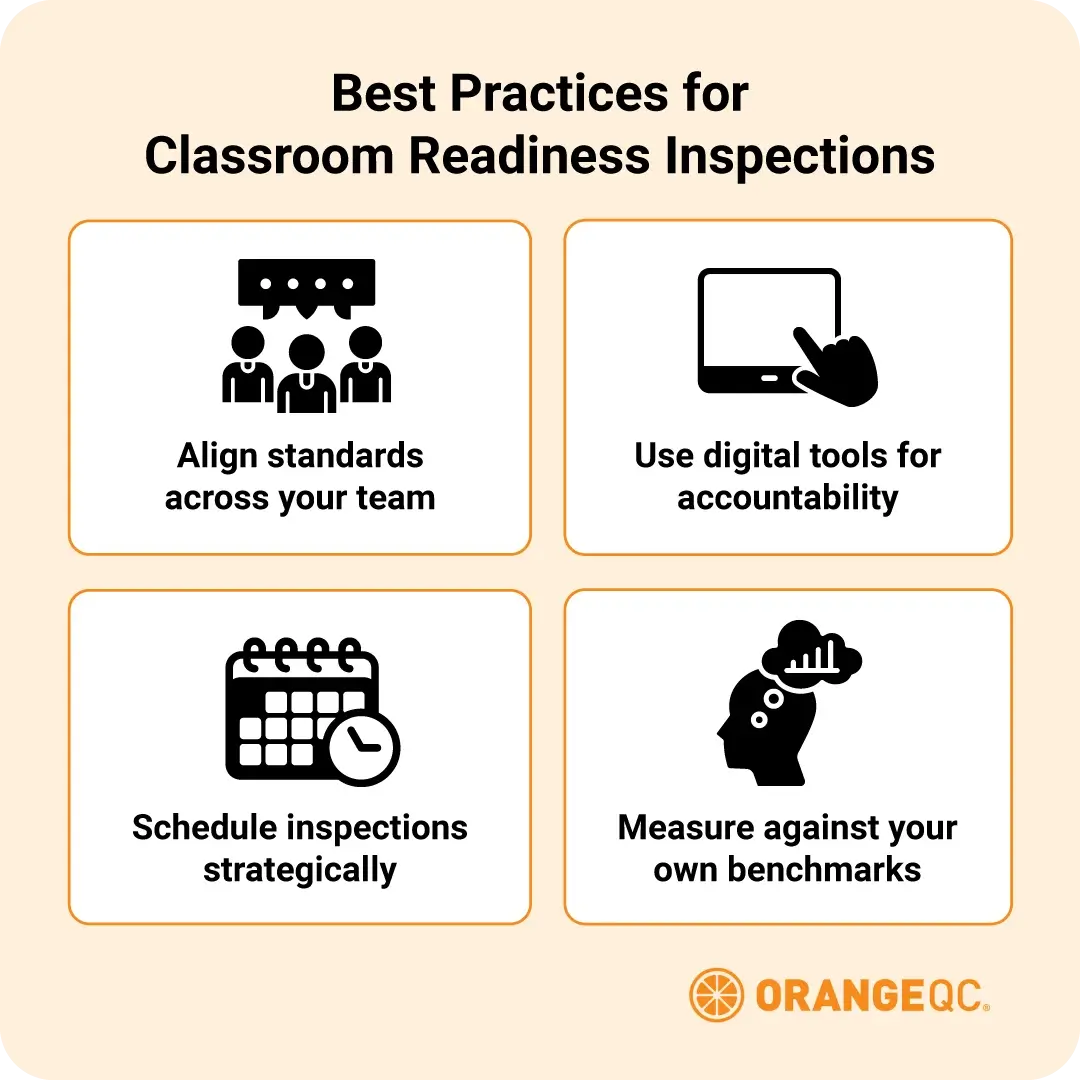
Better classroom inspection data makes for clearer quality insights. To get the most actionable results:

  • Stay consistent: Communicate the expectations for each line item rating with your inspectors so that everyone is on the same page.

  • Go digital: Using inspection software like OrangeQC allows you to include photos, GPS, and timestamps for accuracy and transparency.

  • Time it right: If you’re inspecting the quality of the custodial team’s work, you need to get into the space before a class uses it again.

  • Inspect what you expect: Use the expectations you’ve communicated to your cleaning team as the basis for inspections.

An image with best practices for classroom readiness inspections included in the text above.

FAQs

What are end-of-year classroom cleaning checklists?

End-of-year classroom clean-up checklists take advantage of a break in the school schedule to do a thorough cleaning of each room. The custodian should also note any additional problems that need addressing.

The turnaround for these cleanings depends on the facility’s schedule; some will have summer classes beginning almost immediately, while others may have many classrooms vacant for weeks at a time.

How often should you inspect auditoriums and lecture halls?

If possible, lecture halls should get a high-level inspection daily, as any problems can interrupt learning for hundreds of students at a time. More detailed auditorium inspections can occur on a weekly basis.

How often should classrooms be inspected?

You should inspect classrooms at least once a week and complete detailed audits monthly or quarterly. Some teams choose to inspect a rotating selection of classrooms daily.

Who should receive inspection results?

Share individual classroom inspection scores and feedback with each custodian or team. Team leads, supervisors, and training staff should all receive results to know which areas and line items they need to focus on.

You should share aggregate classroom inspection results with facility stakeholders, such as K-12 principals or building liaisons. This helps build transparency and trust.

More inspection resources

Residence hall inspection guide.

Student Housing Inspection Form

Student housing inspection form Residence halls are some of the busiest buildings on campus. Organized digital inspection checklists can help your team stay on top of their priorities during the school year and be prepared

ISSA Cleaning Industry Management Standard (CIMS)

ISSA CIMS Standard

CIMS is short for Cleaning Industry Management Standards. This ISSA-run certification is awarded to effective, efficient cleaning teams that pass an auditing process. Certified teams have to meet a long list of criteria across a

Facility team member using the OrangeQC cleaning standards app on a smartphone.

Understanding Cleaning Standards

Understanding cleaning standards Cleaning standards create a common language for custodial teams and their clients to talk about expectations and performance. Last Updated Jump to a section: Sign up for a free trial Get a

OrangeQC APPA custodial standards.

APPA Custodial Service Standards: The 5 Levels of Clean

APPA custodial service standards APPA’s custodial service levels provide a common benchmark for measuring cleanliness. Originally created for use in educational facilities, the levels are increasingly being used outside of education because they are detailed