
Public area inspection form

Keep a close eye on quality in spaces that form a visitor’s first impressions.

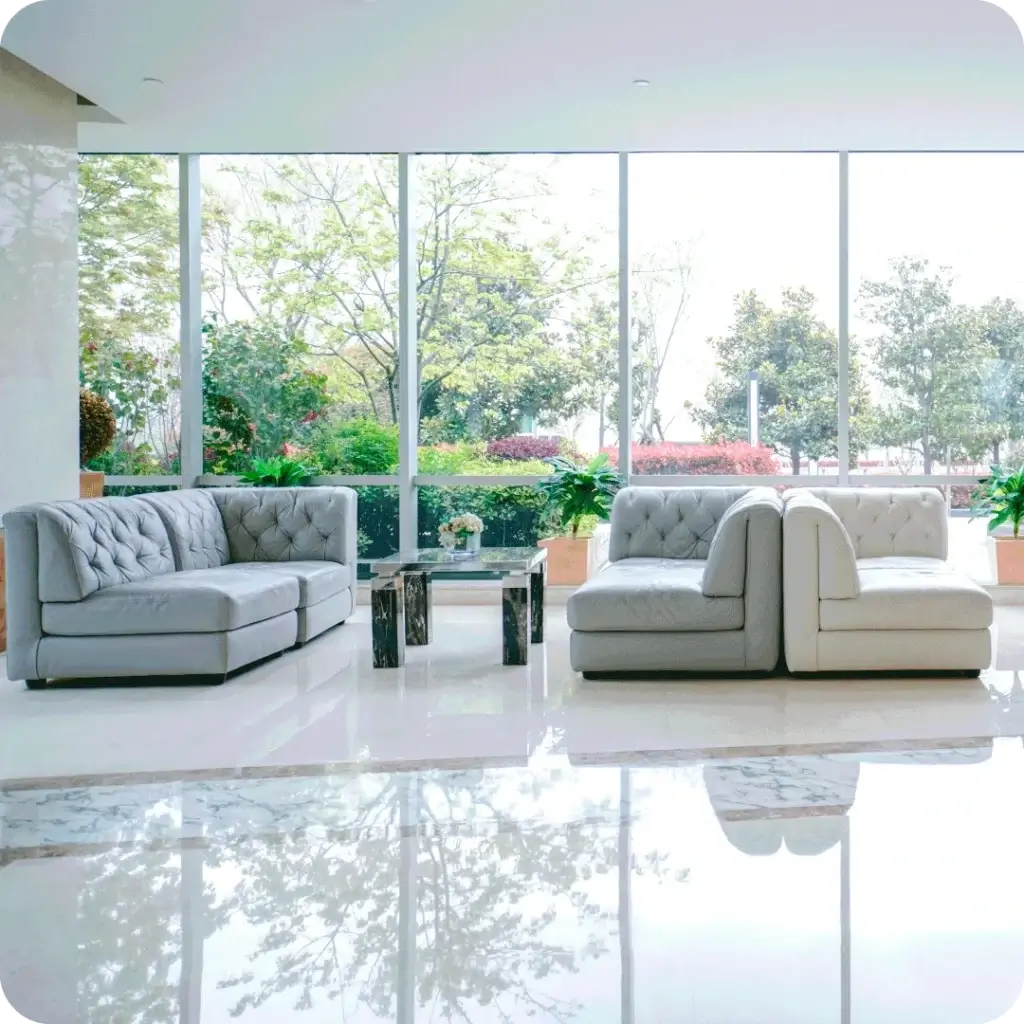
A photo showing a lounge, illustrating a well-maintained public area.

Public areas such as lobbies and reception areas form a visitor’s first impression of a space. They also get the most traffic. Regular inspections help keep these high-visibility spaces looking good.

Sample public area inspection form

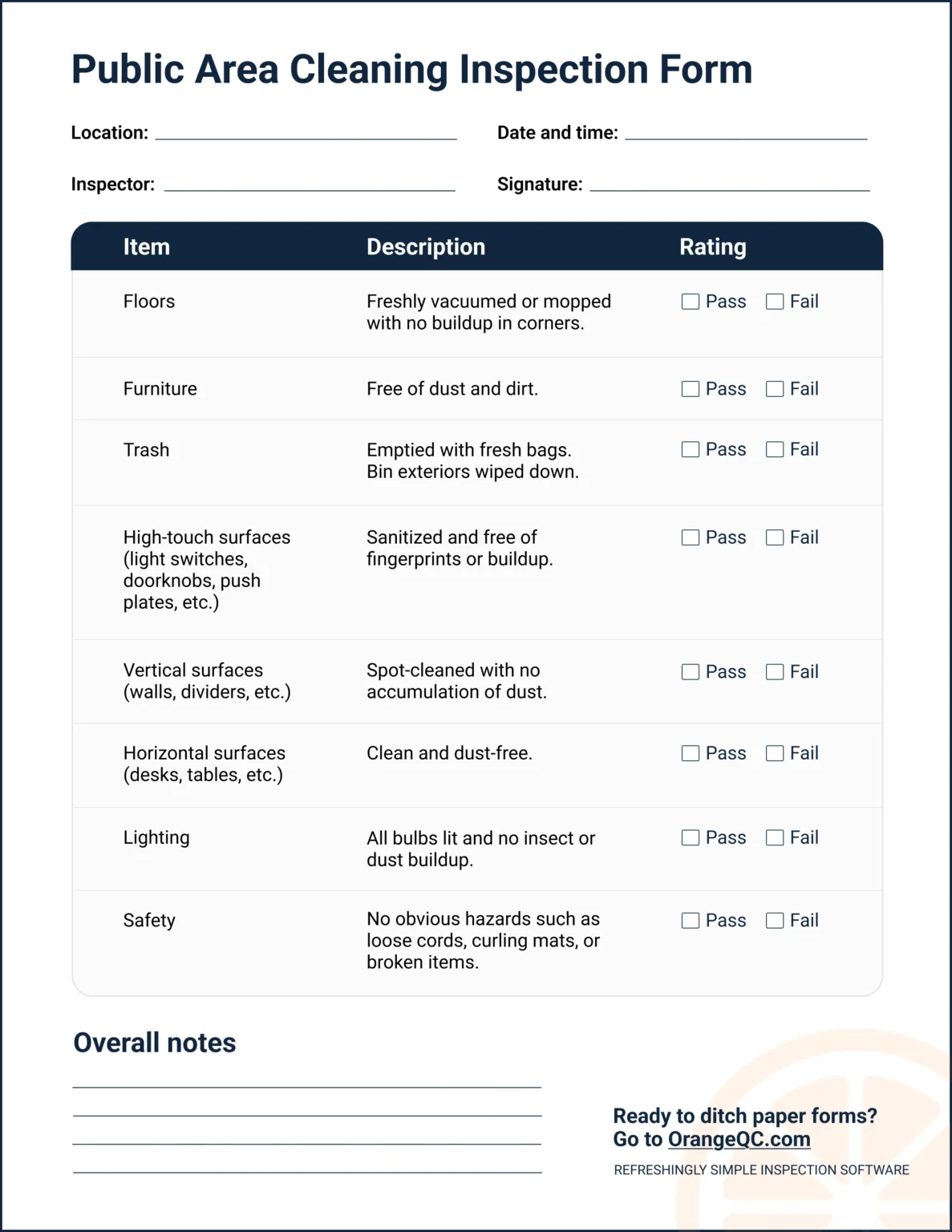
This is an example of a daily or weekly inspection form for evaluating cleaning quality. We’ve kept it short and quick to fill out. You’ll also want to perform a more in-depth inspection on a monthly or quarterly basis to catch buildup and other issues that take more time to evaluate.

Item Description Pass / Fail
Floors Freshly vacuumed or mopped with no buildup in corners. Pass / Fail
Furniture Free of dust and dirt. Pass / Fail
Trash Emptied with fresh bags. Bin exteriors wiped down. Pass / Fail
High-touch surfaces (light switches, doorknobs, push plates, etc.) Sanitized and free of fingerprints or buildup. Pass / Fail
Vertical surfaces (walls, dividers, etc.) Spot-cleaned with no accumulation of dust. Pass / Fail
Horizontal surfaces (desks, tables, etc.) Clean and dust-free. Pass / Fail
Lighting All bulbs lit and no insect or dust buildup. Pass / Fail
Safety No obvious hazards such as loose cords, curling mats, or broken items. Pass / Fail
Overall notes

How often should public areas be inspected?

Inspection frequency depends on building traffic, cleaning frequency, and your contract or service level agreement (SLA). That said, public areas should be among your most frequently inspected spaces.

If it’s a building you clean once a week, for example, you’ll likely want to inspect the public areas every time you’re there. If you’re responsible for maintenance of a busy building throughout the day, you might inspect a space like the lobby multiple times a day.

Additionally, areas such as lobbies and receptions are often adjacent to outdoor entrances. They’re susceptible to tracked-in mud, salt from the parking lot, and dripping raincoats. Frequent inspections give you great data about the best cleaning times and frequencies, as well as how you can adjust those based on the season and building traffic.

Why are common area inspections important?

Routinely inspecting common areas helps you stay on top of your client’s most visited (and valued) spaces. When they bring visitors or their own clients into the building, they want to know the space will look clean and professional.

Spaces such as lobbies and hallways are also the first places they themselves walk into each day. A good first impression of these areas creates a good impression of the building’s overall cleanliness.

How digital inspections keep Rockefeller Center shining

Client Services by Tishman Speyer services high-profile buildings from an impressive portfolio that includes Rockefeller Center in New York City.

Before OrangeQC, the team would take photos of a space, then come back to the office and fill out a paper form. But sometimes, the details would get lost in the process.

Now, the team can complete digital forms right on-site. That process helps them meet their goal of a 24-hour turnaround time for addressing requests.

Best practices for inspecting public areas

Communicating common standards for supervisors and anyone else doing inspections helps you get consistent, reliable results. Best practices include:

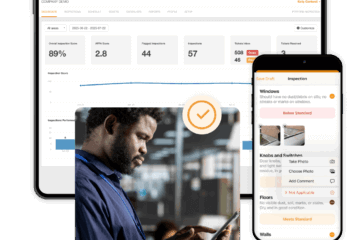
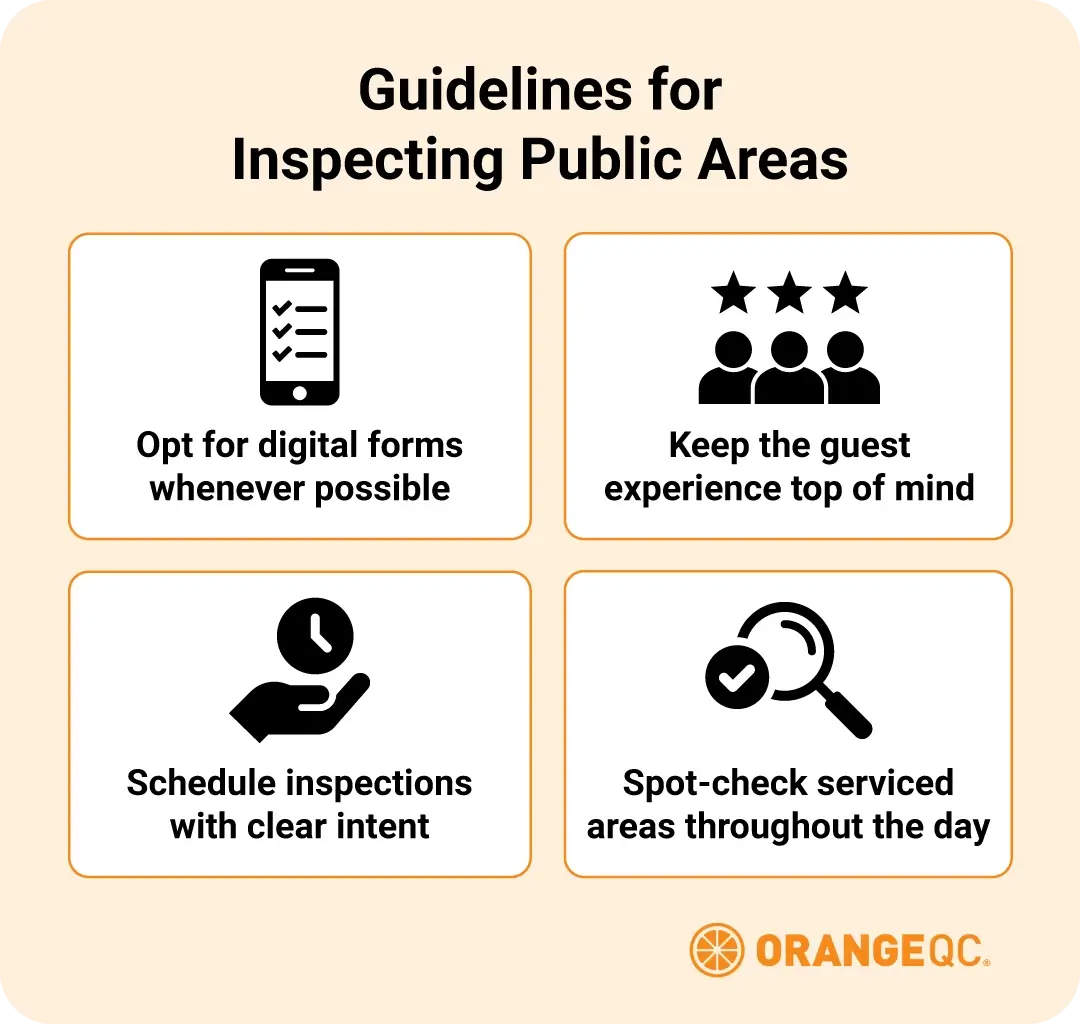
  • Use digital forms if possible. A digital form looks more professional than a clipboard and paper checklist, especially if you’re completing inspections when other people are around.

  • Consider the guest experience. When someone walks into the space, what do they need? What are typical traffic patterns? What might stand out most if it’s not clean?

  • Time inspections intentionally. If your inspections are supposed to measure cleaning effectiveness, be sure to complete them after the clean and before people use the area again.

  • Spot-check areas your team is servicing throughout the day. If you offer day service, spot-checking toward the end of the service window can reveal how badly the area needs cleaning. Adjust frequency and timing accordingly.

An illustration with best practices for public area inspections referenced in the text above.

Questions to clarify client priorities before inspections

Ask these questions during your initial bid walkthrough or during follow-ups with the customer. They’ll help you understand what the customer prioritizes and the challenges you’re likely to face.

  • What do they use the space for?
  • What problems have they had in the past?
  • What are the areas that matter most to them when it comes to cleaning?
  • Are there any times of the week or year when the space really needs to shine or when there’s additional traffic?

How to handle issues found during inspections

If inspectors catch an issue that needs fixing, the whole team should have a process to follow. Teams that use a digital quality control platform, such as OrangeQC, often track corrective actions in a ticketing system.

Whatever process you use, be sure to consider:

  • Who is responsible for assigning the corrective action to a specific team or person?
  • How will you know that the team has fixed the issue?
  • What is the expected timeframe for resolving issues?
  • How will you ensure that the team sees important requests as soon as possible?
  • Is there an easy way to see tickets that the team has not completed?

Your contract or SLA may also have metrics for response time when the corrective action originates from the client.

FAQs

Who is responsible for completing public area inspections?

In addition to regular inspections, the cleaning team supervisor can inspect public areas whenever office or operations staff is in the area.

How detailed should public area inspections be?

Shorter is better for frequent inspections. Focus on quick checks and the most important line items. This means the inspections are quick and easy to do, making it much more likely that you will actually complete them.

How can businesses ensure teams complete inspections consistently?

Assign inspections to a specific person or team, then track progress toward the goal and check in regularly. For example, if you ask a supervisor to submit 15 inspections each month, you don’t want them all coming in on the last day of the month.

More inspection resources

OrangeQC APPA custodial standards.

APPA Custodial Service Standards: The 5 Levels of Clean

APPA custodial service standards APPA’s custodial service levels provide a common benchmark for measuring cleanliness. Originally created for use in educational facilities, the levels are increasingly being used outside of education because they are detailed
Restroom inspection checklist and guide.

Restroom Inspection Form and Cleaning Checklist

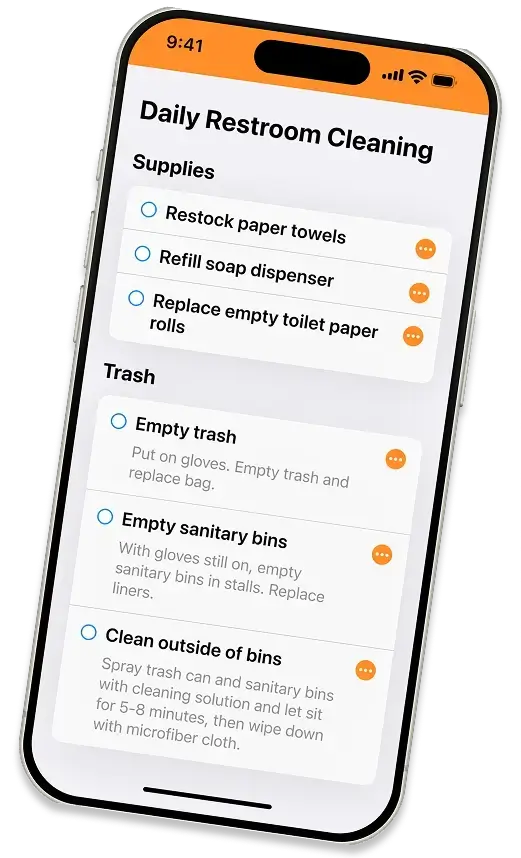
Restroom inspection form & cleaning checklist A good quality control plan involves the entire team. Lay out clear expectations for your custodial staff with a restroom cleaning checklist that helps them pass restroom inspections with

Facility team member using the OrangeQC cleaning standards app on a smartphone.

Understanding Cleaning Standards

Understanding cleaning standards Cleaning standards create a common language for custodial teams and their clients to talk about expectations and performance. Last Updated Jump to a section: Sign up for a free trial Get a

ISSA Cleaning Industry Management Standard (CIMS)

ISSA CIMS Standard

CIMS is short for Cleaning Industry Management Standards. This ISSA-run certification is awarded to effective, efficient cleaning teams that pass an auditing process. Certified teams have to meet a long list of criteria across a