

Airport customer experience inspection form

Airport CX inspections look at the entire travel experience to understand how the airport looks, feels, and operates from a passenger’s viewpoint.

Photo of a family having a positive airport customer experience.

Airports that rely on isolated teams often encounter significant challenges in providing a seamless customer experience. Different teams and contractors are responsible for each stage of a traveler’s journey, from check-in and security to bathroom breaks and boarding. This fragmented approach can lead to miscommunication, delays, and inconsistent service quality.

Why airports need CX inspections

Customer experience inspections (sometimes called CX inspections) bring separate teams together to evaluate the airport experience. Rather than focusing on each team’s responsibilities, they look at how travelers experience the airport as a whole.

In the end, travelers don’t care whose responsibility it is to make the journey smooth. They just care that it is smooth.

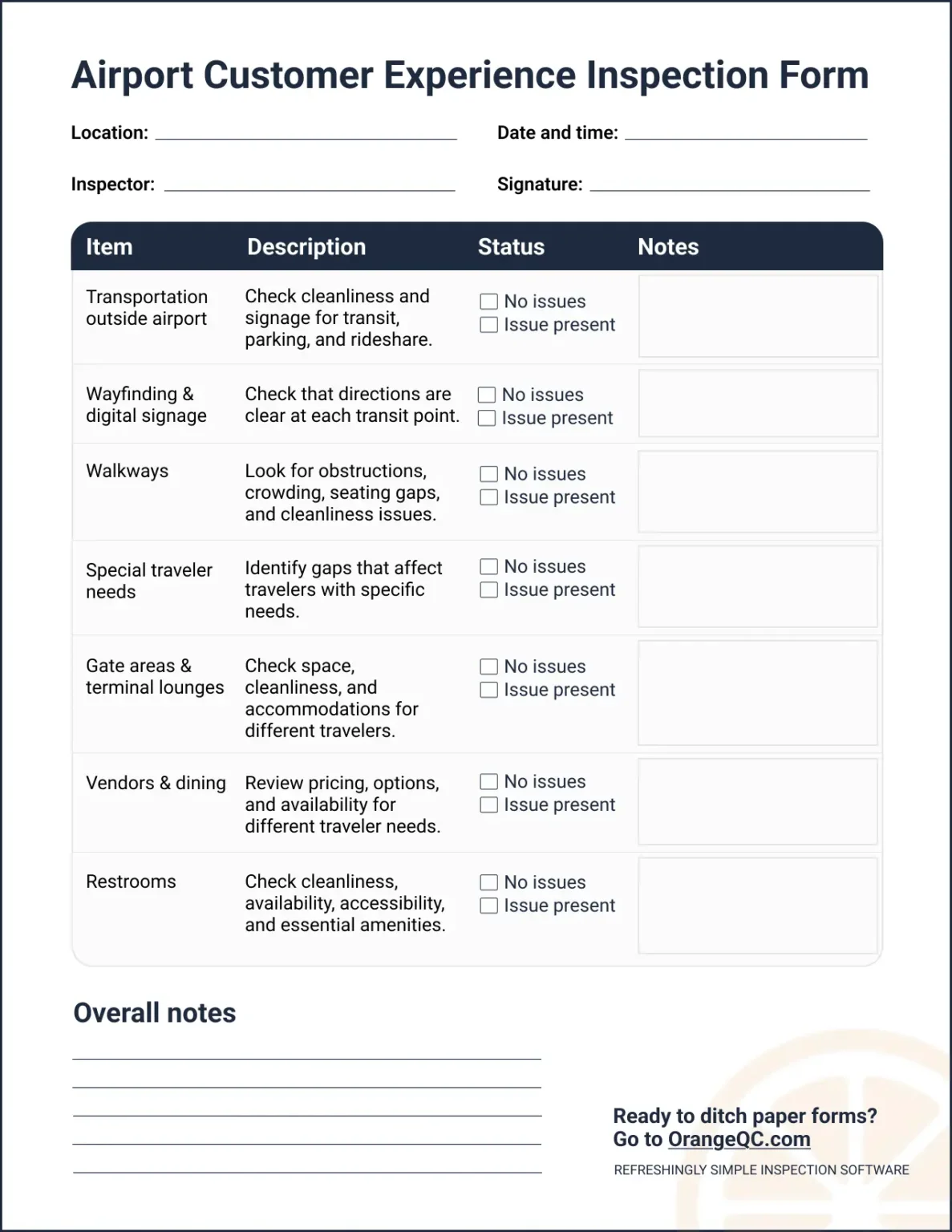
Sample airport customer experience inspection form

Teams create and perform CX inspections with the traveler’s experience in mind. We’ve provided an example airport CX inspection form to serve as a starting point.

Remember: This particular inspection isn’t about checking items off a list but finding points of friction that might not be on anyone’s list. Comments and photos will help the inspector call these points out.

Transportation outside airport

Evaluate cleanliness of and signage for public transit, parking options, rideshare options, etc.

Wayfinding and digital signage

Note signage at each transit point and identify any places where direction is unclear.

Walkways

Note any obstructions, large gaps between seating, crowded areas, cleanliness issues, etc.

Special traveler needs

Describe any gaps in experience based on specific needs.

Gate areas and terminal lounges

Note available spaces, cleanliness, and other considerations for traveler types.

Vendors and dining

Evaluate pricing, options, and availability for different traveler needs.

Restrooms

Assess availability and cleanliness, as well as specific needs such as changing tables, wheelchair stalls, menstrual product disposal and vending, etc.

Copy. Customize. Go.

This template is waiting for you in OrangeQC.

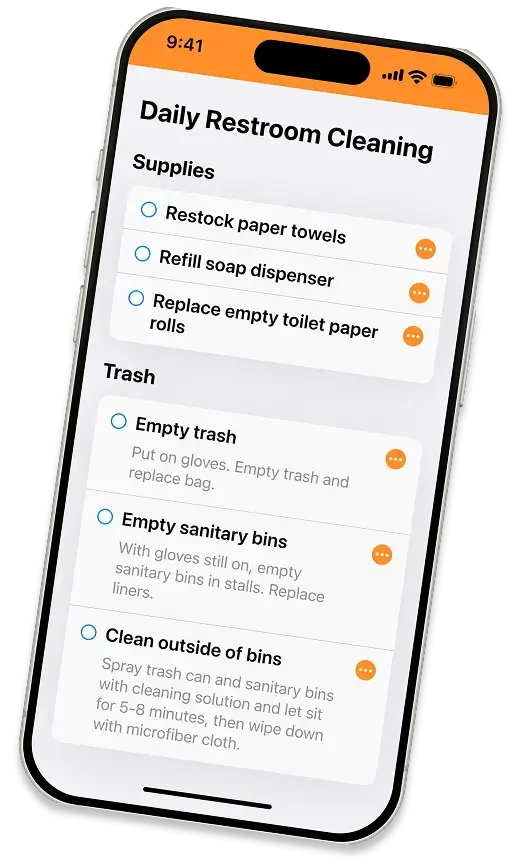
Photo of an iPhone with a sample checklist from OrangeQC.

Passenger journeys to consider when evaluating airport quality

Our more general guide to customer experience inspections breaks down how CX inspections work, how to use them effectively, and how to act on the information your team gathers. The key point: Adopt the perspective of the person using the facilities. In this case, that’s airport passengers.

Different travelers will experience your space in completely different ways. Identifying common goals, limitations, and expectations is easier if you think about specific stories. Your airport may have a list of traveler profiles you can work from; here are some examples.

Business travelers

A business traveler may look for:

  • Somewhere quiet where they can take a call or video meeting
  • Working charging stations and comfortable places to sit
  • High-quality, easily accessible Wi-Fi
  • A place to grab a quick bite to eat in between calls or layovers
  • Healthy meal options to break up all the dining out

Families with young children

Someone traveling with young children may look for:

  • Family restrooms with clean, working changing tables
  • Affordable meals with options that appeal to children
  • Places where kids can run and be noisy without bothering other travelers
  • Private spaces explicitly marked for parents who need to nurse or pump
  • Clear signage that doesn’t require a device or other hands-on method to use

Travelers with mobility issues or disabilities

There are a wide range of disabilities and mobility limitations that impact travel in different ways. While you likely have ADA or other local compliance standards to meet, think through other ways to make this experience smoother, such as:

  • Places to sit briefly in long corridors or where there are lines
  • Clearly marked ways to request assistance
  • Points of transition for wheelchair users, such as on and off the airport shuttle
  • Handrail placement and cleanliness
  • Detailed information about accessibility throughout the airport, available online and in terminals
  • Clear through-travel routes in areas where people might congregate or slow down to browse shops and eateries
  • Anything that obstructs clear travel paths

Vacationing travelers

Think about the couple on their honeymoon, a group of friends headed to their alma mater for a college reunion, or a traveler off to a favorite destination. They may look for:

  • A fun, experiential place to eat or grab a celebratory drink
  • Places to sit and wait with their entire group, rather than splitting up
  • Reasonably priced souvenirs to mark the occasion
  • Eateries or dining spaces that accommodate large groups

Overlap between global audit standards and CX inspections

Global aviation benchmarks such as Skytrax, ACI World’s ASQ, and J.D. Power Airport Satisfaction Studies shape the reputation and competitiveness of airports. They provide independent assessments of customer experience across the industry.

To achieve high ratings on these benchmarks, airports must consistently exceed international standards. By conducting regular CX inspections, airports can identify and address service gaps in real time, ensuring that every touchpoint meets global best practices. Proactive internal audits prepare airports for external evaluations, ultimately leading to higher ratings and increased traveler satisfaction.

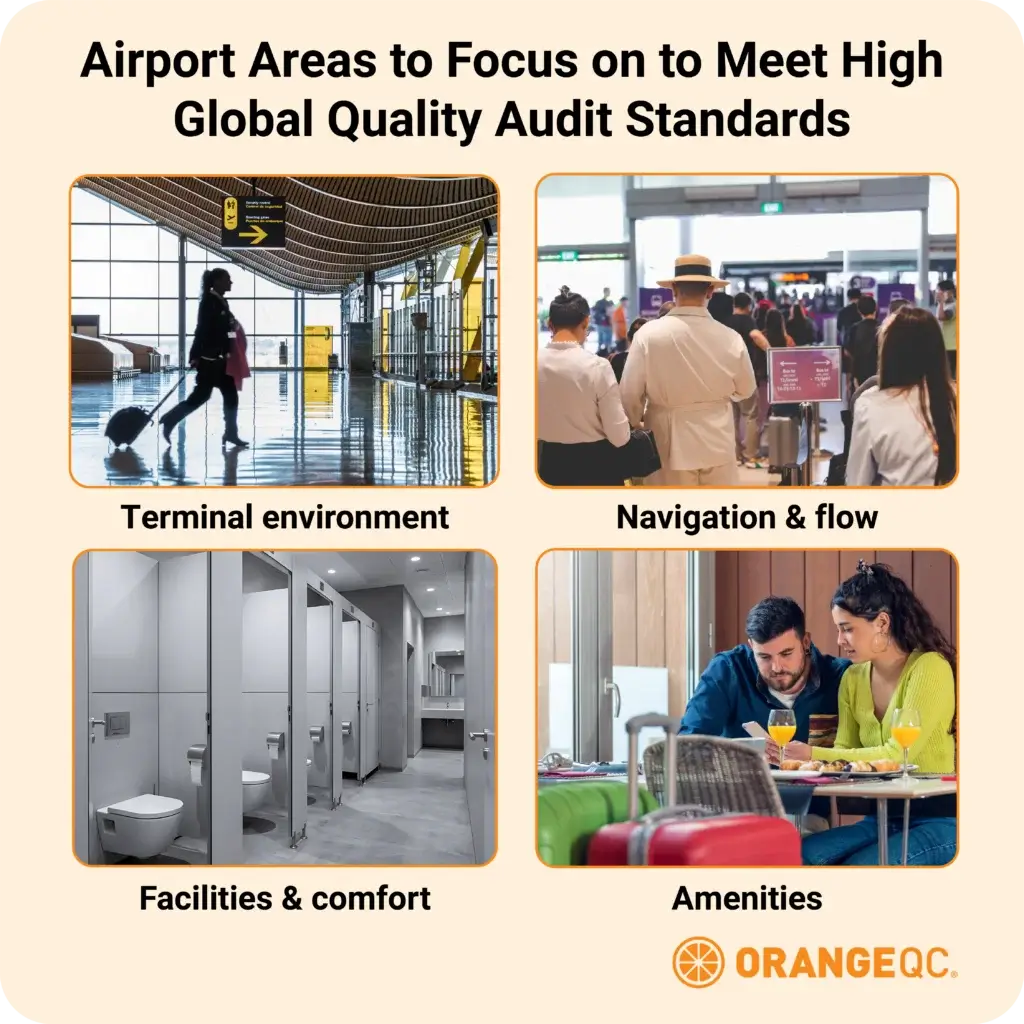
Here are some of the key operational areas auditors focus on:

  • Terminal environment: This includes the design, decor, general maintenance, and overall cleanliness.
  • Navigation and flow: This looks at directional signage and ease of passenger flows.
  • Facilities and comfort: This evaluates public seating availability, restrooms, and airport Wi-Fi performance.
  • Amenities: This includes shopping choices, food and beverage options, and airline lounge quality.
Illustration of four customer experience areas in airports to focus on for global quality audits.

See how top aviation teams keep terminal standards high

In our work with teams at airports across North America, we’ve come across some great examples of smart ideas to help improve overall terminal quality.

How the Port Authority's Service Delivery Unit tracks CX

With astoundingly busy airports such as LaGuardia to manage, the Port Authority of New York and New Jersey has a complex web of teams working in tandem to keep everything running. They formed a Service Delivery Unit specifically to look at the traveler experience across these areas of responsibility.

Establishing accountability across departments with digital software

Software tools such as OrangeQC help bridge communication gaps between departments through email compatibility, easy contractor account setup, and complimentary ticket-only app users.

Airports and transit teams of all sizes use our tools to maintain quality in the midst of heavy traffic.

FAQs

What’s the difference between an airport cleaning checklist and a CX inspection form?

Custodial staff use an airport cleaning checklist to track operational tasks and cleaning. Key items on the checklist include mopping floors, emptying trash bins, wiping down counters, and cleaning restrooms. The primary goal is to maintain cleanliness and adhere to safety standards, and teams typically complete these tasks multiple times throughout the day.

Quality assurance teams and airport managers use an airport CX inspection form to assess passengers’ experiences and perceptions. It helps them evaluate key aspects such as navigation ease, lighting levels, overall cleanliness, seating availability, and staff helpfulness, among other factors.

How often should airport customer experience audits be conducted?

You should typically conduct these inspections on a monthly or quarterly basis or during periodic audits. We recommend establishing a regular schedule and conducting them proactively.

Who should perform airport CX walkthroughs?

A team such as the Port Authority’s Service Delivery Unit or the general airport management/operations team should perform walkthroughs. Regardless, it must be a team that can coordinate effectively with everyone in the airport.

More resources

Restroom inspection checklist and guide.

Restroom Inspection Form and Cleaning Checklist

Restroom inspection form & cleaning checklist A good quality control plan involves the entire team. Lay out clear expectations for your custodial staff with a restroom cleaning checklist that helps them pass restroom inspections with

Read More »
Facility team member using the OrangeQC cleaning standards app on a smartphone.

Understanding Cleaning Standards

Understanding cleaning standards Cleaning standards create a common language for custodial teams and their clients to talk about expectations and performance. Last Updated Jump to a section: Sign up for a free trial Get a

Read More »
A photo depicting a janitorial inspector in the field looking at a report on a tablet.

Janitorial Quality Plan

What is a janitorial quality plan? A quality plan is your team’s playbook for meeting expectations and improving service. It’s a written document that defines requirements and the processes that your team will use to

Read More »
A photo showing a lounge, illustrating a well-maintained public area.

Public Area Inspection Form

Public area inspection form Keep a close eye on quality in spaces that form a visitor’s first impressions. Download the Public Area Inspection Form (PDF) Last Updated Jump to a section: Sign up for a

Read More »

About the author

Gina Meeks

Gina Meeks

Gina is a writer and communications professional with more than a decade of experience in the non-profit sector. She helps organizations showcase their impact through content.