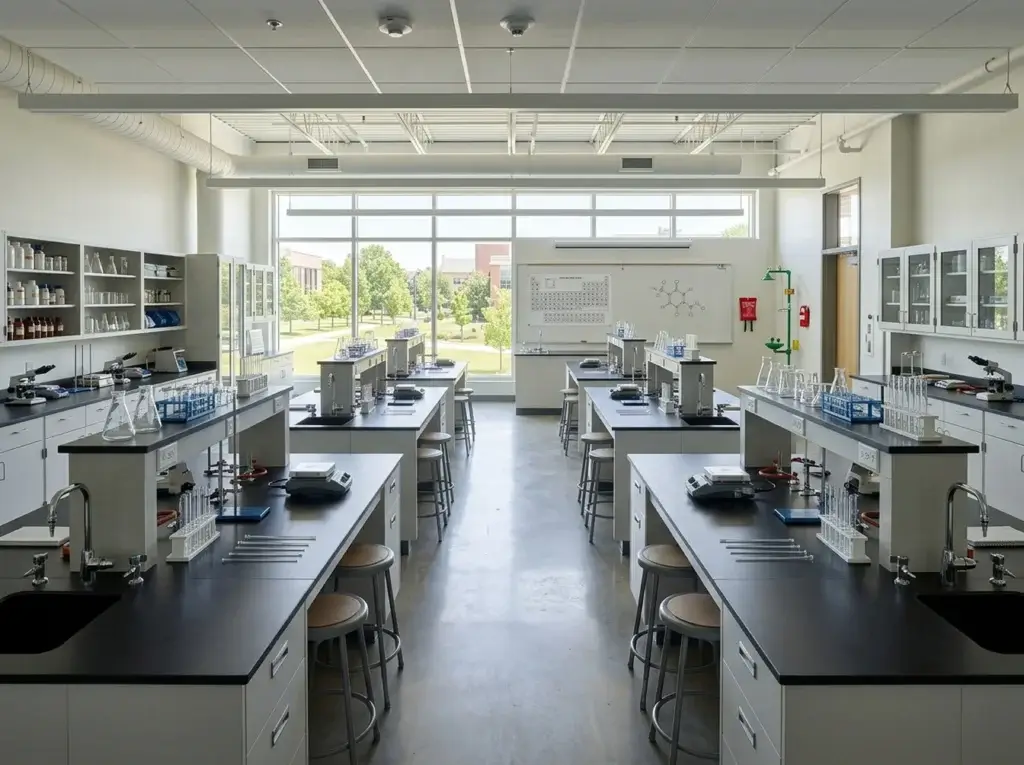
From school labs stocked with Bunsen burners to university research labs preserving delicate samples, science rooms for teaching and research require special care.
Laboratories and science rooms require trained cleaning technicians, or disasters could occur. Ask the right questions up front to create a detailed plan for cleaning these specialized spaces safely.
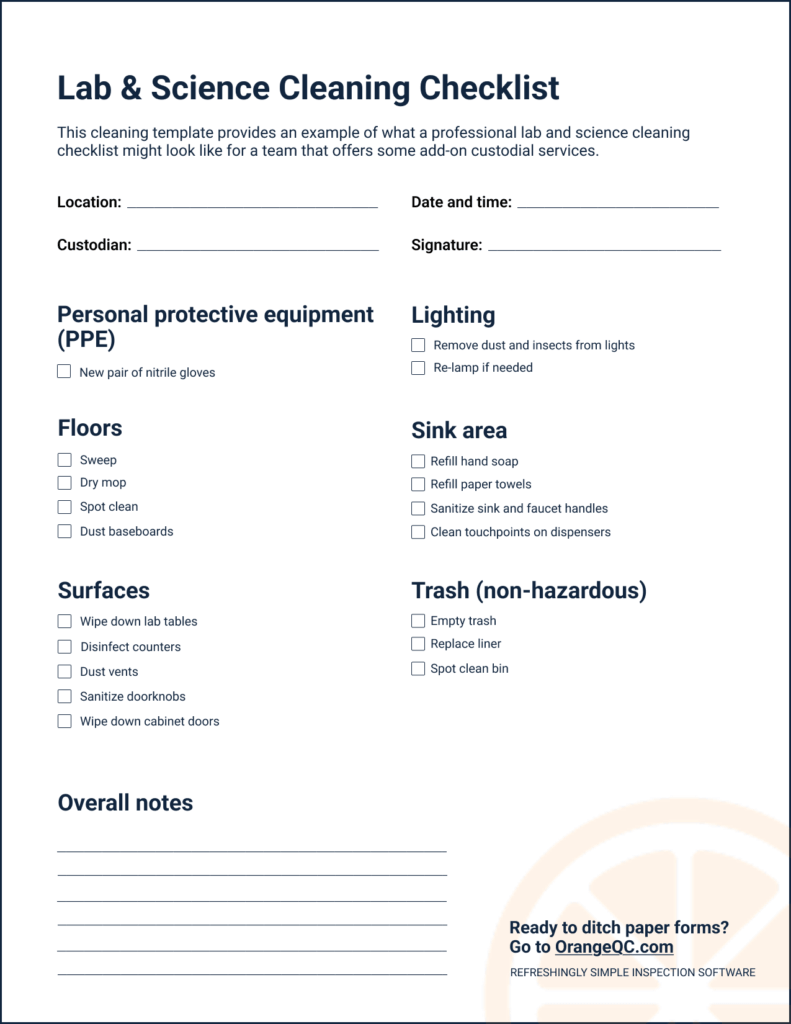
Sample cleaning checklist for a school science lab
This is a sample checklist to give you an idea of what cleaning a lab or science classroom might involve. Before you begin cleaning a laboratory space, be sure to fully review exactly what cleaning procedures, chemicals, and equipment you can use. Every team member who will be working in the lab must review this information.
Differences within student classrooms and research labs
Not all lab spaces have the same needs. When you’re evaluating a space for cleaning, be sure to ask about the lab’s unique needs, including:
Scientific equipment that you shouldn’t move or touch
How the lab stores research materials and chemicals
Procedures for dealing with spills How to handle hazardous waste
Safety features, such as fume hoods and eyewash stations
Chemical residues that may react with certain cleaning agents
If the lab creates hazardous waste, stocks extremely dangerous chemicals, or handles sensitive research specimens, everyone should know who to contact in case of a question or emergency.
Best practices for working around scientific equipment
When working around lab equipment and tools, the best advice you can give your team is to only touch things they absolutely need to. If they’re working in a space that handles especially sensitive materials or tools, be clear about where the lab stores them and what they look like. You don’t want to end up with a situation where a custodian unplugs a fridge with 20 years’ worth of research stored inside.
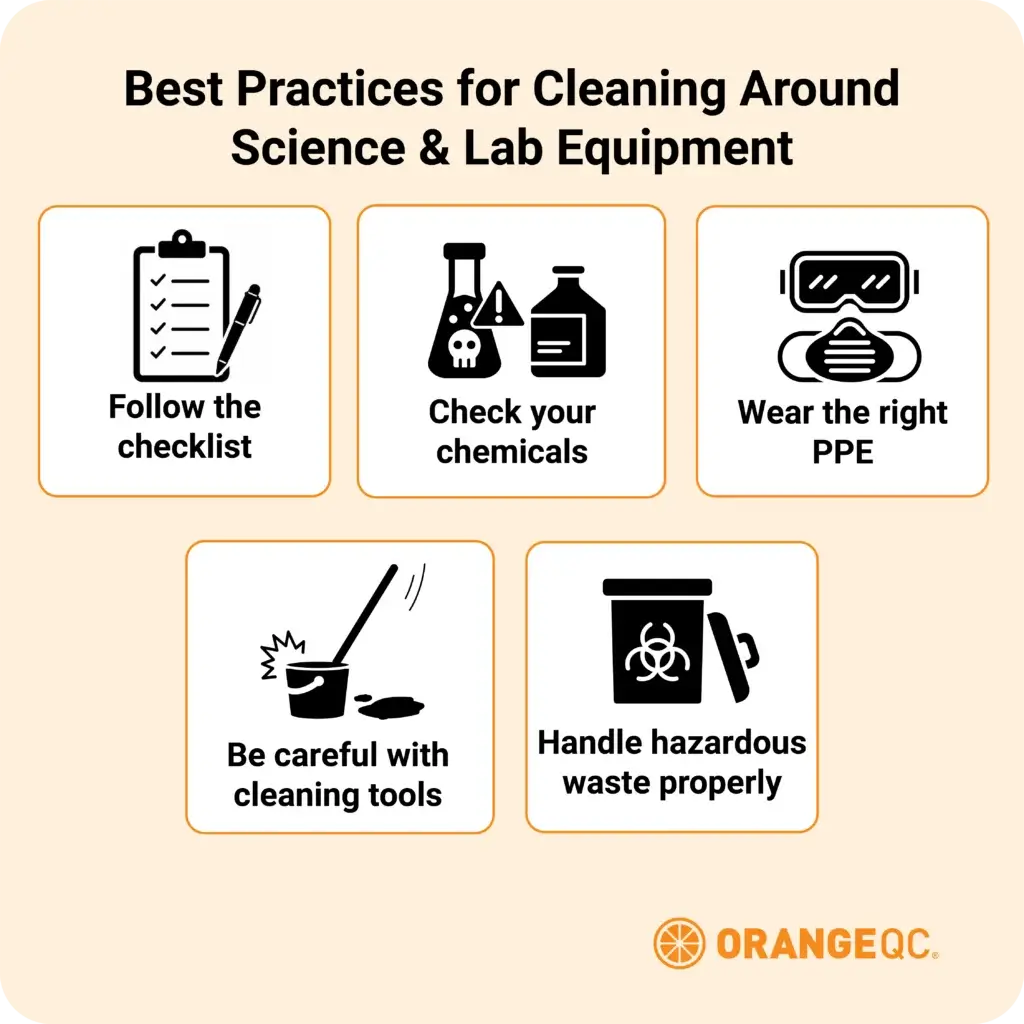
Some general best practices for working around scientific equipment include:
Only clean the areas and objects that the cleaning checklist specifies.
Use appropriate PPE for the lab.
Double-check the cleaning chemicals you use to avoid causing reactions.
Handle hazardous waste with care and follow all of the legally required steps.
Practice extra caution with large cleaning tools such as mops and corded vacuums, which can knock things over if you’re not careful.
Resources for handling hazardous waste
If the lab you’re working in generates hazardous waste, you’ll need to know whether your team is responsible for helping with disposal. Some labs will have a specific person in charge of this role. Be sure to budget time for this, as there are extra steps to safely and legally deal with hazardous waste.
The lab should be able to provide you with guidance on proper disposal. For more information on dealing with hazardous waste, refer to the following resources:
If your team works at a university, especially one that does medical research, it may assign you to clean specialty labs. These “med-ed” spaces can include:
Research labs that deal with pathogens requiring disinfection against certain microorganisms
Vivariums, or labs with small animals for medical research
Gross anatomy labs that use cadavers for teaching and training
Medical labs that support care through a clinic
If your team is responsible for such a space, be sure to work closely with the lab supervisor to clarify who’s responsible for what.
You can also look for guidance from organizations such as APPA, which has a section on medical education and healthcare delivery facilities in Chapter 11 of “Operational Guidelines for Educational Facilities: Custodial (Fourth Edition).”
Establishing accountability with digital lab cleaning logs
Keeping digital service logs helps your team track completed service for transparency and accountability. If problems arise in a lab that your team services, you’ll be glad to have recently completed inspection forms or service logs. Timestamps, GPS location, and photos all help keep a reliable record of your team’s work in the space.
FAQs
How often should you perform lab inspections?
You should inspect labs regularly, not only for cleaning but also for process compliance. You might inspect a high school lab once a week or once a month. A research or med-ed lab will require much more frequent inspections.
Who is responsible for cleaning specialized scientific equipment?
That depends on the lab and the client. Usually, a dedicated laboratory manager will be in charge of most equipment, and your team should avoid touching or moving scientific equipment.
If you’re getting into more specialized lab cleaning services, you may be responsible for more equipment cleaning. The lab manager should provide guidance, but you should also seek out resources on proper cleaning and handling from the equipment manufacturer.
What is the difference between cleaning and disinfecting in a lab?
Cleaning refers to removing dirt, grime, dust, and other unwanted debris from a space. Disinfection is the process of killing certain microorganisms. If you’re working in a lab that needs regular disinfection, be sure to match the disinfecting product to the pathogens you’re trying to kill, double-checking both concentration and dwell time.