
Data-driven facility management

“Data-driven” can feel like a buzzword, but it all comes down to making informed choices based on reliable information.

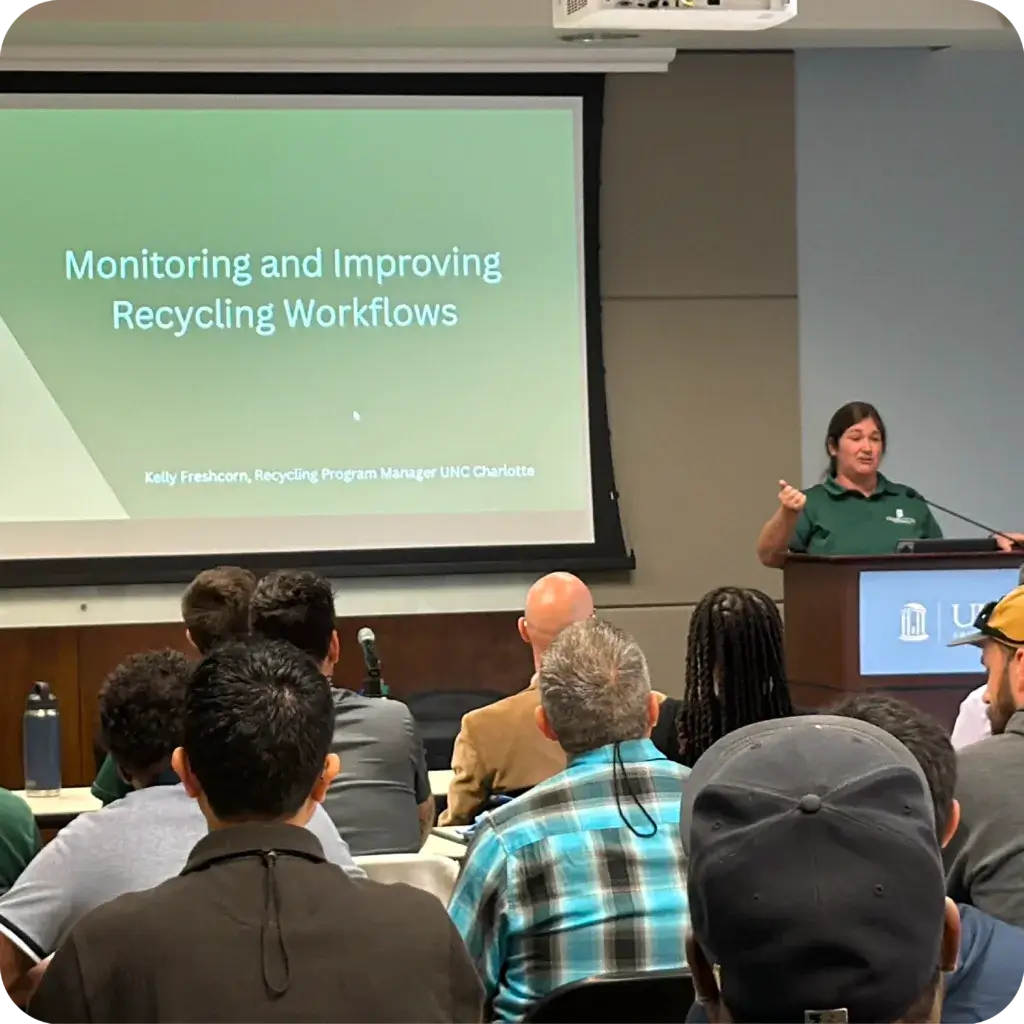
Speaker presenting a slide titled "Monitoring and Improving Recycling Workflows" to a seated audience in a conference room.

Managing a facility comes with a dizzying amount of data, especially as new technology emerges to track everything from traffic flow to building occupancy to the level of soap in a dispenser. Here, we’ll highlight some of the strategies that our clients use to make sense of all the noise and run their facilities more efficiently.

What data-driven facility management means and why it’s important

A car can only have one driver. If data is driving your team, that means you’re not basing your decisions on one person’s preference, the easiest choice, or what you’ve always done.

An informed decision is always better than a best guess. Collecting the right data helps teams operate strategically based on the patterns and trends they’re seeing.

New AI tools make it easier than ever to analyze information and spot patterns, but they need a large amount of high-quality data. Your output is only as good as your input.

What data is useful to facility managers?

Rather than focusing on what data you should be collecting or what data is the easiest to collect, start with what questions you find yourself asking when making decisions. What information would be most helpful when answering those questions?

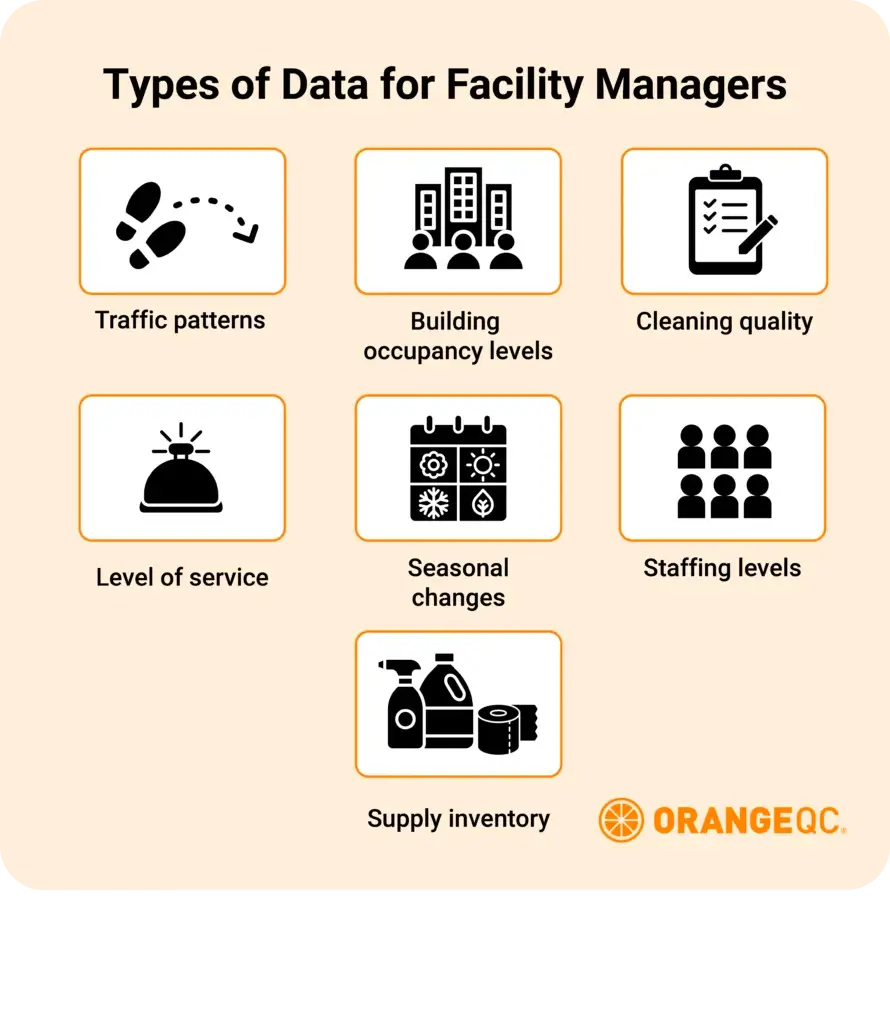
A few examples include:

  • Traffic patterns
  • Building occupancy levels
  • Cleaning quality
  • Level of service
  • Seasonal changes
  • Staffing levels
  • Supply inventory

How instant analytics keeps UNC Charlotte’s facilities teams in the loop

Kenyel Spaulding, an Assistant Director at UNC Charlotte, shared that one of the biggest draws for his team to use OrangeQC is the instant analytics.

“Before this, I was having to compile spreadsheets, get them to the analytics department, and wait for something to come back, maybe a week later,” Spaulding shared during a presentation at the 2026 NCAPPA Conference.

Now, there’s no delay between completing inspections and checklists and accessing the data.

“We have a Monday meeting where we report on some of these stats, and I always have them at my fingertips,” he said.

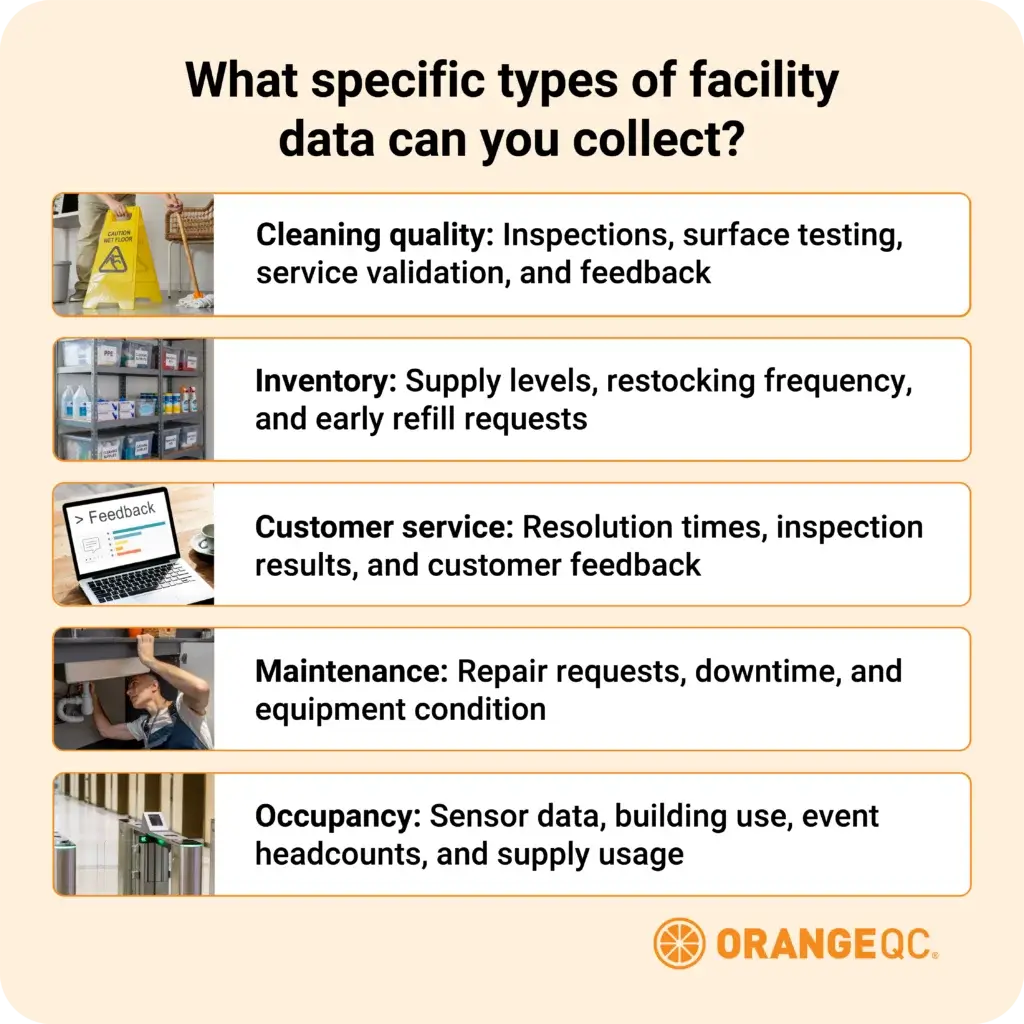
What specific types of facility data can you collect?

When you know what questions you want to answer about your facilities, you can hone in on the types of data to collect.

  • Cleaning quality: Inspection results, surface testing results (such as ATP measurements), resident surveys, service validation, and complaint tracking
  • Inventory: Inventory levels, restocking frequency, and requests for restocks before planned refills
  • Customer service: Ticket resolution times, results from public relations inspections, customer feedback and surveys
  • Maintenance: Repair requests, time out of service, and equipment condition
  • Occupancy: Occupancy sensor results, reports of building use, special event headcounts, and consumable usage

How data collection can help facility managers save organizations money

It comes down to efficiency. When you can see which areas need less work and which need more, you’re able to move resources to the right place.

Below are a few examples:

  • By collecting data on usage, UNC Charlotte’s recycling team was able to eliminate two unnecessary dumpsters.
  • Octoclean, a commercial cleaning franchise, tracks inspection completion as an early indicator of which supervisors are on top of their responsibilities.
  • Monitoring completion of assigned tasks can reveal where the workload might be unrealistic or where certain teams need more support.
  • Building occupancy data and trends can pinpoint times of the week or year that might require less servicing to achieve the same quality standard.

Optimize facilities staffing through data collection

You can collect data that helps your team match staffing to your goals. For example, the Residential Services team at Northwestern University used data from cleaning quality inspections to show that their second shift needed more staff to complete work to standards.

The operations team knew the problem, but being able to present a clear pattern to the administration team made the trade-off clear. Once the team had adequate staff, they were able to follow up and demonstrate the improvements.

Use OrangeQC’s built-in reports to get the facilities data you need

When tools are purpose-made for facilities applications, they’re easier to customize to get the exact data you need. OrangeQC’s reporting software was made for cleaning, maintenance, and facilities teams.

We’ve built in reports that make sense for managing these workflows. These include:

  • Overall Report: Track scores and trends across all your locations. A big-picture report helps you monitor how things are going.
  • Deficient Line Item Report: See which line items are failing most often for different places and accounts.
  • Point-Based and APPA Report: Measure your team’s performance by APPA standards.
  • Tickets Report: Track your team’s response times and resolution rates, as well as which locations are handling a high number of complaints or customer requests.
  • Inspector Leaderboard: See how many inspections each inspector is completing and their overall score distribution. This helps you make sure everyone is on track in terms of how often they’re completing inspections and reveals whether your team is scoring consistently.
  • Visit Log: See your team’s check-in history, with a GPS map view that shows their route and progress in real time.

If you’re interested in how OrangeQC can simplify data-driven facility management, we’d be happy to set up a one-on-one video call for a demo of our tools.

FAQs

Do I need a large facility or a huge budget to justify data-driven management?

No. Facilities and teams of all sizes benefit from making smart decisions based on quality information. Of course, you’ll want to adjust the scope of your data collection and review depending on your team’s size and goals. Bathroom occupancy sensors might make sense for a busy airport terminal cleaning team, while an elementary school custodial team might just track when the soap tends to run low.

How can facility teams successfully adopt data collection tools?

This is an important question that a lot of teams breeze past. You can get some great ideas for introducing new software from our interview with Kathy Patton, who introduced new tech to the Licking/Knox Goodwill Services team during her tenure there. Her tips include rolling out new tools to a small trial team, being hands-on during the implementation process, and communicating the purpose of the tools honestly to your staff.

How often should facility data be reviewed?

Certain metrics are likely worth checking daily, especially if you have data coming in to validate service completion. You’ll need to decide how often you review other metrics. If you find yourself thinking “I should have checked this sooner” when looking over a report or dashboard, that’s your cue to increase how often you’re checking in.

How does AI support data-driven facility management?

One of the strengths of emerging AI tools is their ability to recognize patterns. The more data you have, the more signals these tools will be able to pull.

But AI tools are only effective when they have access to accurate and consistent data. Without strong data collection practices, AI-generated insights may be incomplete or unreliable.

More resources

OrangeQC APPA custodial standards.

APPA Custodial Service Standards: The 5 Levels of Clean

APPA custodial service standards APPA’s custodial service levels provide a common benchmark for measuring cleanliness. Originally created for use in educational facilities, the levels are increasingly being used outside of education because they are detailed
Read More »
Facility team member using the OrangeQC cleaning standards app on a smartphone.

Understanding Cleaning Standards

Understanding cleaning standards Cleaning standards create a common language for custodial teams and their clients to talk about expectations and performance. Last Updated Jump to a section: Sign up for a free trial Get a

Read More »
ISSA Cleaning Industry Management Standard (CIMS)

ISSA CIMS Standard

CIMS is short for Cleaning Industry Management Standards. This ISSA-run certification is awarded to effective, efficient cleaning teams that pass an auditing process. Certified teams have to meet a long list of criteria across a range of areas, from quality systems to health and safety.

Read More »
A photo depicting a janitorial inspector in the field looking at a report on a tablet.

Janitorial Quality Plan

What is a janitorial quality plan? A quality plan is your team’s playbook for meeting expectations and improving service. It’s a written document that defines requirements and the processes that your team will use to

Read More »