Cleaning validation is increasingly becoming a standard practice for custodial teams. In this guide, we’ll explore how to create a validation process that works for your team.
Cleaning validation is anything that confirms the completion of a cleaning service. Some teams also refer to it as service validation, proof of service, or cleaning verification.
Why cleaning validation is increasingly crucial
If you’ve ever had a customer doubt that your team actually cleaned their space, you know how crucial validation is. This becomes especially important if your team works after hours or if the client contact is not on-site at the facility.
But the current demand for validation goes beyond what we’ve seen in the past. A few factors driving this demand include:
Growth of technology that simplifies validation in other areas of life. When Amazon sends us photos of packages delivered to our doorsteps, why wouldn’t we expect similar service from a cleaning company?
Decentralization of the workforce so that the person in charge of the cleaning contract may not actually be in the physical spaces every day. When you can’t see the results with your own eyes, it’s nice to have proof that the cleaning team is doing their job before the on-site staff start complaining.
Easier access to data analysis through AI and other automated tools, which drives demand for validation from cleaning teams themselves. You can learn a lot about your operations through this kind of analysis, but you’re limited by how much high-quality data you have available.
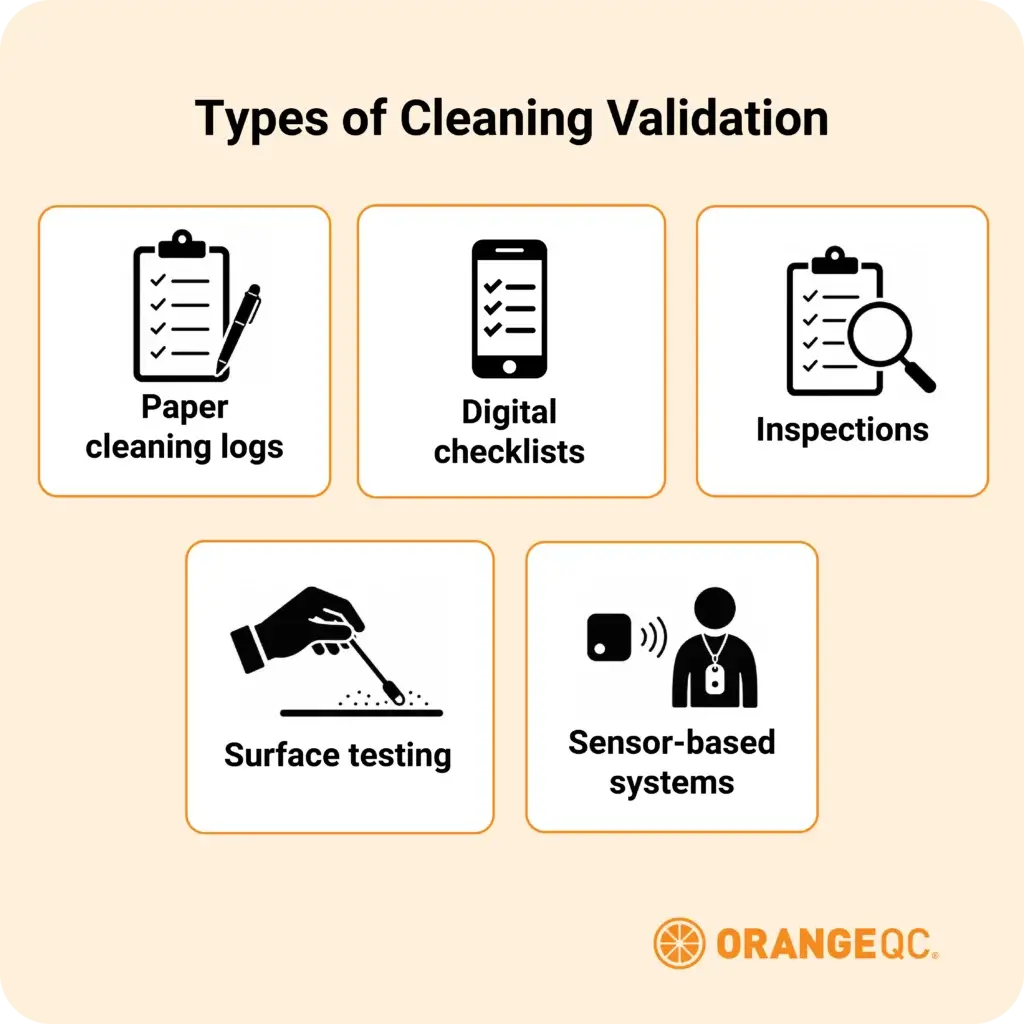
Types of cleaning validation
Validation can be as simple as a quick checklist or as complicated as an internet-enabled beacon installation. Each approach has pros and cons to consider.
Paper cleaning logs
With paper cleaning logs, the custodian signs off on a checklist or chart after they’re done cleaning. They’re common in restrooms, where custodians might initial a specific shift or note the date.
Paper logs are simple and free to create and use. However, they don’t look neat, and the only way to check completion is to physically walk into the room. They’re best suited for small in-house teams.
Digital checklists
Digital checklists move cleaning logs from paper to a mobile device. They eliminate clipboard clutter and allow operations or management to remotely check whether teams have completed cleanings, in real time.
Digital checklists are fast and simple for cleaning teams to use. Look for tools that automatically capture timestamps and the GPS location to streamline the process.
Inspections
The primary purpose of inspections is usually evaluation rather than validation. But inspections do also validate that someone is cleaning the space. If an inspector finds a clean, tidy restroom in a high-traffic building, someone has obviously cleaned it recently. Frequent inspections with photos and timestamps serve double duty as validation and evaluation.
Surface testing
Surface testing indirectly validates cleaning by measuring surface cleanliness. Inspectors often do this type of test to measure how effective the cleaning is, but a record of surface tests showing a sanitary surface also builds trust that your team is getting the cleaning done.
Sensor-based systems
Up until this point, Internet of Things technology within custodial operations was mostly from a supply perspective. For example, teams in high-traffic facilities such as sports stadiums or airports might use soap dispensers with sensors that alert when it’s time for a refill.
Companies such as Mero now offer systems that run on similar technology for the purposes of cleaning validation. Installers set the beacons in place, which then communicate with sensors that custodians carry on a fob.
After installation, it’s very simple for custodians to use the system; all they need to do is wear the sensor fobs. For most teams, the drawbacks are cost and complexity. The systems require specially bought equipment.
The role of photos in cleaning validation
Photos are a great tool for documenting cleaning. They not only show that your team cleaned a space but also how it looked afterward. You can use these before-and-after photos to highlight your team’s effectiveness.
To prevent abuse, validation technology that incorporates photos should include timestamps and a GPS ping, as well as a note if a team member attached a photo from the device’s gallery/camera roll rather than taking it via the in-app camera.
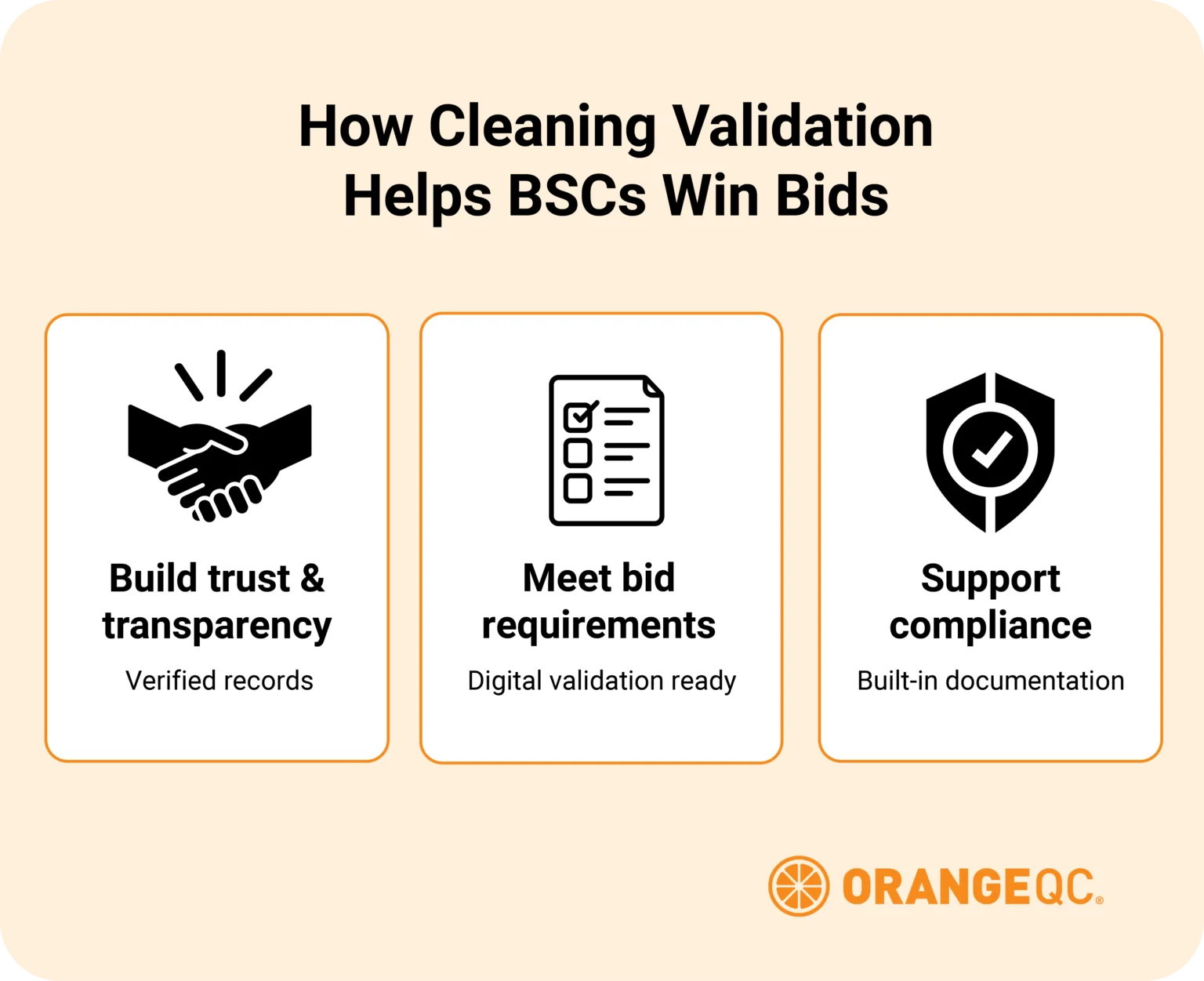
How cleaning validation can help BSCs win bids
Cleaning validation is a strong selling point for commercial cleaning teams. It can also be a requirement for certain jobs. Benefits during the sales process include:
Signaling transparency: When you showcase validation to a potential client, they know you’ll be on top of cleaning completion (so they don’t have to be).
Meeting bid requirements: RFPs are increasingly including digital validation as a requirement for the winning bid. If you already have a validation program up and running, that makes it easier to win these contracts.
Complying with local regulations: If regulations such as Ontario’s Occupational Health and Safety Act require your client to keep cleaning records, having a built-in validation platform will make your bid more competitive.
What makes a good checklist app for cleaning validation?
A good checklist app has to meet the needs of the frontline staff, your operations team, and your client. Look for these things:
Ease of use: If a checklist app isn’t straightforward, it’s going to be challenging to get your team to use it.
Customization options: The tool should be flexible to fit your process, with customizable checklists that meet your current and future needs.
Benefits to staff: Frontline staff already have their hands full with everything they need to do to service a space. A good checklist app not only makes validation as easy as possible, it also serves as a useful tool for staff to find important information or report problems.
Photo capabilities: A simple snap of a cleaned space verifies it meets your team’s standards. Look for tools that will flag whether your team takes photos in-app or uploads them from a device’s camera roll, which is a simple way to prevent misuse.
Reporting tools: Built-in reporting can help you catch trends and problems early. You should also own all of the data and be able to export it to other tools if you need.
FAQs
What’s the difference between cleaning verification and cleaning validation?
People often use these terms interchangeably, but they do have different meanings within the context of quality management. Verification is usually an internal or regulation-based process. Validation focuses on confirming that the team has completed service as intended for the customer.
How quickly can my team learn to use cleaning validation software?
Frontline staff should be able to learn how to use a checklist app very quickly. Once they’re logged in, they can find the right list and start checking items off within minutes.
How does cleaning validation improve communication with my clients?
Validation offers clients peace of mind that you’re accomplishing the cleaning they’ve paid for. It also gives you a great starting point in case of an issue at the client’s location; you can pull up the most recent check-in to see what photos and notes your team recorded.
Is cleaning validation only useful for high-compliance facilities like hospitals?
No. While these high-compliance teams may have been the first to adopt validation procedures, many teams can benefit from a version of this process. Commercial cleaning teams we work with report that validation is a useful tool for sales and retention in office buildings, schools, and across industries.